Washington’s approach to the security crisis in eastern Democratic Republic of Congo appears to be evolving as geopolitical tensions involving Iran increasingly intersect with discussions surrounding the conflict in Central Africa.
For years, the fighting in eastern Congo has largely been viewed through the lens of regional rivalries, armed groups, and humanitarian concerns. However, recent developments involving Iran’s growing international military engagement have added a new layer to the debate, drawing greater attention from policymakers in the United States.
The shift became more noticeable following multinational naval exercises hosted in South Africa and attended by several countries associated with the BRICS bloc and its partners, including Russia, China, the United Arab Emirates, and Iran. Although the exercises were officially presented as efforts to strengthen maritime security and combat transnational crime, they generated concern in Washington.
American officials have increasingly expressed unease about expanding military cooperation between Iran and countries that play influential roles across Africa. The participation of Tehran in high-profile international security activities has reinforced fears among Western policymakers that Iran is seeking to broaden its strategic reach beyond the Middle East.
Reports from South Africa suggested that President Cyril Ramaphosa faced pressure from Western partners regarding Iran’s involvement in the exercises. While Pretoria has not fundamentally altered its foreign policy direction, the issue sparked debate within political and security circles.
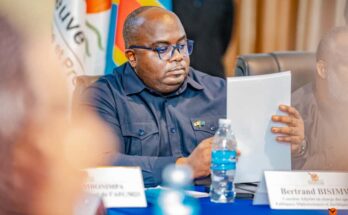
At the same time, regional diplomatic and military discussions involving the Democratic Republic of Congo, Tanzania, Burundi, Angola, and South Africa have continued. These talks focus on strengthening security cooperation as Kinshasa seeks support against armed movements operating in eastern Congo.
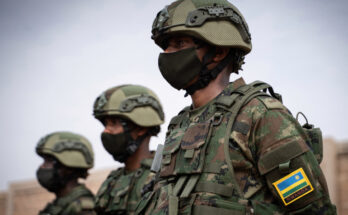
Security reports indicate that Tanzania may expand its military presence in Congo, while Burundi continues deploying troops in several strategic areas of South Kivu. These deployments are intended to support Congolese government forces as they attempt to regain territory lost during recent phases of the conflict.
For Washington, concerns extend beyond developments inside Congo itself. The broader confrontation between the United States and Iran has become an increasingly important factor shaping strategic calculations.
In May 2026, Iranian authorities warned that the ongoing war involving Iran, the United States, and Israel could have consequences far beyond the Middle East. Such statements prompted analysts to examine how global geopolitical tensions might influence conflicts elsewhere, including eastern Congo.
Economic considerations have also played a role. Since the outbreak of the Iran conflict in February 2026 and the disruption of shipping through the Strait of Hormuz, global markets have experienced significant volatility. Rising transportation costs, energy prices, and supply-chain disruptions have affected industries worldwide.
The Democratic Republic of Congo, one of the world’s leading producers of cobalt and a major source of copper, has not been immune to these pressures. The combination of insecurity in mining regions and international economic uncertainty has heightened concerns about the stability of critical mineral supply chains.
Political analysts increasingly argue that eastern Congo is no longer viewed solely as a domestic or regional conflict. Instead, it is becoming part of a wider geopolitical contest involving major global powers seeking influence in Africa.
On one side stand the United States and its traditional partners. On the other are countries such as Russia, China, and Iran, all of which have expanded their diplomatic, economic, and strategic engagement across the continent.
Meanwhile, Washington has adopted a firmer tone toward Tehran. Speaking at the Shangri-La Dialogue in Singapore on May 30, 2026, U.S. Defense Secretary Pete Hegseth signaled that military action against Iran remained an option if negotiations failed to produce a lasting settlement.
“We have sufficient capability to restart the war if necessary. The weapons stockpiles are full, both over there and all around the world. We are in a good position,” Hegseth stated.
He also emphasized America’s ability to sustain multiple security commitments simultaneously.
“We could do two things at the same time. We are speeding up the production of weapons so that we can manufacture two, three, or four times what we currently have, ensuring that our various operations around the world go smoothly,” he added.
These remarks have been interpreted by many observers as evidence that Washington is intensifying its scrutiny of Iranian activities worldwide, including partnerships that could indirectly affect African security dynamics.
While no public evidence currently demonstrates direct Iranian involvement in the fighting in eastern Congo, Iran’s growing visibility in international security discussions connected to Africa has clearly influenced strategic debates in Washington.
As clashes continue across eastern Congo, civilians remain the primary victims, facing displacement, humanitarian hardship, and ongoing insecurity. Experts warn that if the conflict becomes increasingly entangled with global power competition, the prospects for long-term peace in the Great Lakes region could become even more complicated.
For now, Kinshasa continues seeking diplomatic and military support from regional and international partners, while the United States closely monitors developments that could reshape both the battlefield and the geopolitical balance surrounding one of Africa’s most persistent conflicts.