Rwanda has reaffirmed its commitment to constructive diplomacy, regional stability, and results-driven international cooperation, while intensifying its campaign for Louise Mushikiwabo’s continued leadership of the Organisation Internationale de la Francophonie (OIF).
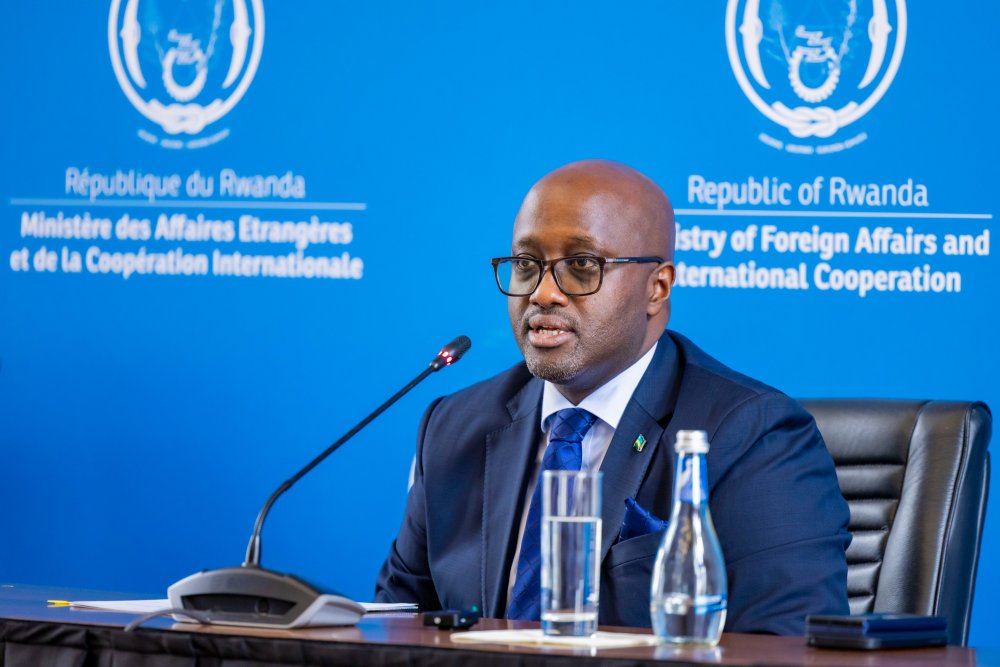
The message was delivered by Foreign Affairs and International Cooperation Minister Olivier Nduhungirehe during a meeting with diplomats accredited to Rwanda.
Discussions covered a wide range of issues, including the upcoming Francophonie leadership election, security challenges in the Great Lakes region, Rwanda’s security partnership with Mozambique, and measures to prevent the spread of Ebola from neighboring countries.
With the OIF Secretary-General election scheduled for November in Cambodia, Rwanda is actively lobbying member states to support Mushikiwabo for another term. The former Rwandan foreign minister first assumed the role in 2018 and secured a second mandate in 2022.
Her candidacy for a third term was formally submitted by Rwanda in January 2026, following strong backing from member states during the Francophonie Ministerial Conference held in Kigali in November 2025.
According to Nduhungirehe, Mushikiwabo’s tenure has significantly strengthened the organization’s global influence and relevance.
“Louise Mushikiwabo has elevated La Francophonie to another level. Under her leadership, this organization has gained a well-deserved seat at the decision-making table on issues related to youth job creation, democratic governance, the economy, culture, gender equality, and the promotion of the French language.”
The nomination period for candidates closed on May 15. A special ministerial meeting is expected in June, where contenders will present their visions before member states formulate recommendations for heads of state ahead of the final vote.
Mushikiwabo faces competition from Juliana Amato Lumumba, daughter of Congolese independence leader Patrice Lumumba and candidate of the Democratic Republic of Congo, as well as former Romanian Prime Minister Dacian Ciolos and Mauritanian presidential adviser Coumba Ba.
Turning to regional security, Nduhungirehe reiterated Rwanda’s position that lasting peace in eastern DRC can only be achieved through sincere implementation of existing peace agreements and constructive engagement by all stakeholders.
“Rwanda calls upon the international community and all partners to engage with the DRC in a constructive manner, yielding tangible results in the implementation of its commitments.”
He warned that failing to apply balanced pressure and ensure accountability could undermine ongoing peace initiatives.
“Failing to do so would be tantamount to supporting the DRC’s military approach. Without unbiased pressure and follow-up on the implementation of what was agreed upon, we cannot establish the conditions and reasons that would lead to lasting peace in the Great Lakes region.”
His remarks come as clashes involving the Congolese government and M23 continue despite regional and international efforts aimed at promoting ceasefires and political dialogue.
Nduhungirehe also highlighted Rwanda’s security cooperation with Mozambique, particularly the deployment of Rwandan troops and police officers in Cabo Delgado, where they have been supporting counterterrorism operations since July 2021.
He said Rwanda had chosen to work directly with the Mozambican government to ensure the continuity of the mission.
“This year, Rwanda decided to work exclusively with the Government of Mozambique, which has received and will continue to receive the necessary support for the Rwandan military and police forces in Cabo Delgado. The cooperation between both governments has yielded results so far, and it will continue to progress well into the future.”
The statement follows the suspension of a planned €20 million European Union support package that had been intended to assist counterterrorism operations.
Five years after the deployment began, Rwanda considers the mission a major success. Areas once controlled by extremist groups have been reclaimed, security conditions have improved considerably, and thousands of displaced residents have been able to return home and rebuild their lives.
As the Francophonie election approaches and regional peace efforts continue, Rwanda is positioning itself as a strong advocate for dialogue, multilateral cooperation, and sustainable security solutions across Africa and beyond.