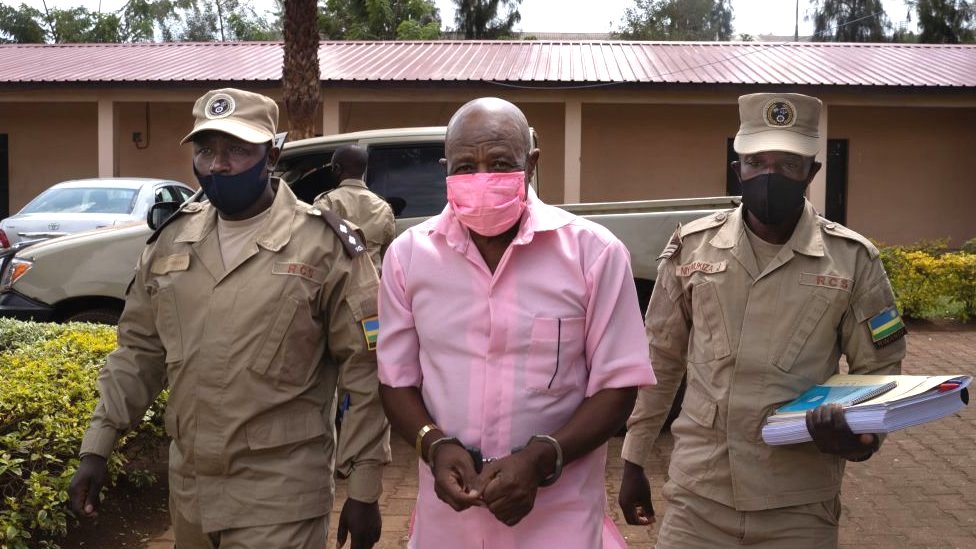
Paul Rusesabagina has once again become the center of controversy after making new claims about his arrest and detention in Rwanda, statements that critics say sharply contradict both his earlier testimony and publicly known facts surrounding his case.
The former hotel manager, who was sentenced to 25 years in prison after being convicted on terrorism-related charges before receiving a presidential pardon in March 2023, recently told supporters that Rwandan authorities attempted to persuade him to join the government shortly after his arrest.
According to Rusesabagina, officials allegedly offered him several high-ranking positions if he agreed to cooperate with the administration.
“They told me: ‘If you want to become an ambassador, choose the country and we will send you there. If you want to become a minister, pick the ministry and it will be yours. If you want to become Vice President, we can give you that too. The only position we cannot offer you is President,’” he claimed.
The remarks quickly triggered intense debate online and among political observers, particularly because Rwanda’s political system does not include the position of Vice President.
Several analysts dismissed the claims as fabricated and inconsistent with Rwanda’s constitutional structure.
“One obvious problem is that Rwanda does not even have a Vice President position,” one political commentator said. “Why would a government offer top state offices to someone facing terrorism charges instead of prosecuting him? The story raises more questions than answers.”
Others pointed out that neither Rusesabagina nor his lawyers had ever mentioned such allegations during his trial, in public interviews, or in the years immediately following his release.
The renewed controversy also revived attention on the apology letter Rusesabagina wrote to President Paul Kagame on October 14, 2022, while still imprisoned.
In that letter, he stated: “I assure you through this letter that I no longer seek any personal or political interest. Matters related to Rwandan politics will be left behind.”
That declaration played a major role in the clemency process that eventually led to his release on March 24, 2023.
Now, critics argue that his latest political remarks contradict the promises he made while seeking forgiveness from the Rwandan government.
Rusesabagina further claimed that after refusing the alleged offers, he was taken around Kigali and shown the country’s development projects while officials questioned why he continued opposing Rwanda despite its progress.
That account also generated skepticism among observers who questioned whether a detainee accused of serious crimes would realistically be given guided tours around the capital city.
“Where in the world does a terrorism suspect get treated like a tourist?” another commentator asked. “It simply does not align with normal criminal procedures.”
The former detainee also alleged that he was physically weak and nearly collapsing when he was first presented to the media at the Rwanda Investigation Bureau (RIB).
However, several people familiar with his detention conditions disputed that portrayal, saying he received treatment far better than that of ordinary inmates.
Accounts from individuals who visited him during detention describe a relatively comfortable environment in which he reportedly had access to hotel meals, beverages of his choice, books, furniture, and regular visits.
One visitor recalled sharing fruit with him during a visit at Remera Police Station.
“On one occasion, we sat together eating fruit, and he even offered me some,” the source said.
Rusesabagina also described prison conditions at Kigali’s Mageragere prison as harsh and isolating, claiming he had limited interaction with other inmates and very restricted outdoor access.
Yet former inmates and visitors disputed those claims as well, saying he had his own room equipped with books, a bed, and chairs for receiving visitors, and that he appeared to be in stable condition throughout his incarceration.
The latest remarks have reignited international debate over Rusesabagina’s credibility, with critics accusing him of constantly reshaping his narrative depending on his audience.