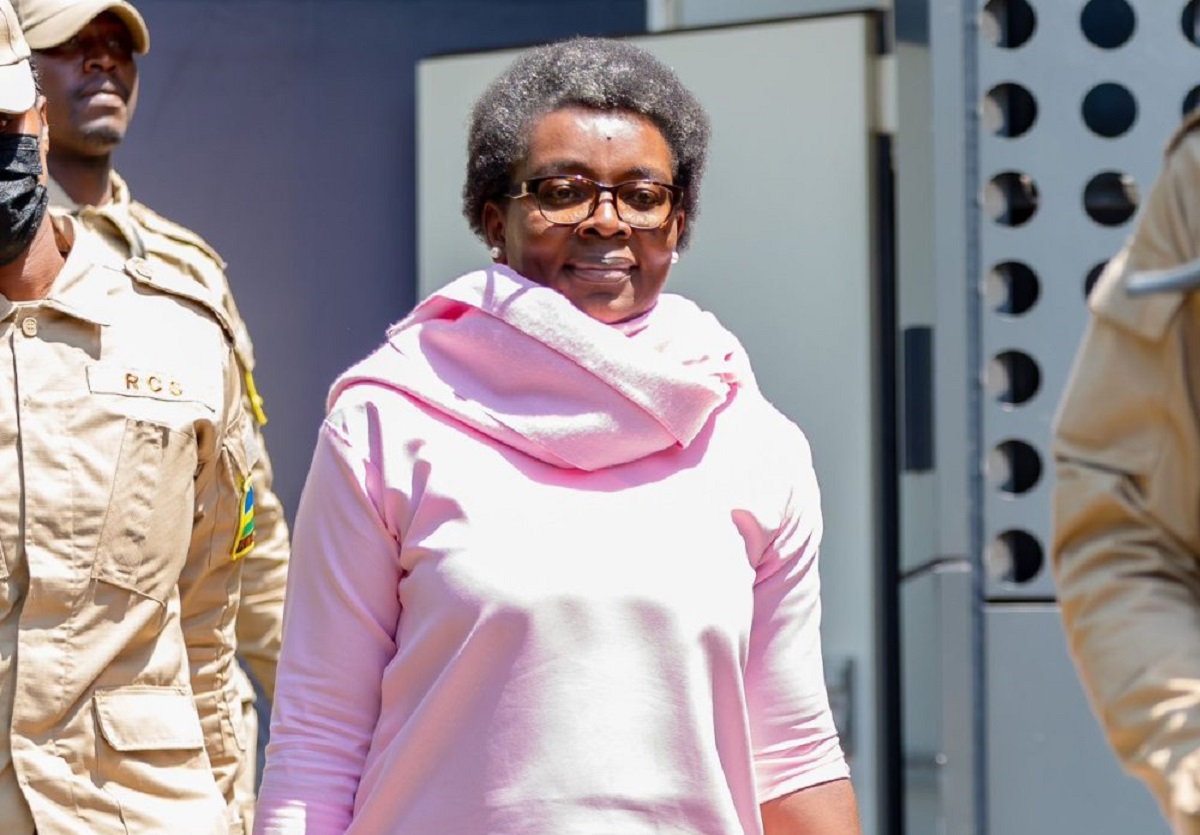
Rwanda’s High Court has decided that the criminal proceedings involving opposition figure Ingabire Victoire Umuhoza will move forward on June 17, 2026, after rejecting her request to suspend the trial so she could spend more time consulting with her co-defendants.
The ruling marks a significant development in a closely watched case that has generated legal debate over trial preparation, defendants’ rights, and procedural fairness.
Ingabire faces several charges, including forming a criminal organization, incitement to public disorder, acts aimed at undermining state authority, spreading false information and propaganda intended to damage Rwanda’s image abroad, disseminating rumors, conspiracy against the government, and organizing unlawful demonstrations.
Prosecutors link the accusations to training sessions conducted in 2021 for members of DALFA Umurinzi, a political organization not officially recognized in Rwanda. The sessions reportedly involved discussions based on Blueprint for Revolution, a book written by Serbian activist Srdja Popovic, and were coordinated by Sylvain Sibomana.
During the hearing, Ingabire argued that she never attended the training sessions herself but is accused in relation to activities connected to them. She told the court that she needs direct access to those who participated in order to understand what took place and adequately prepare her defense.
She maintained that meaningful consultation with co-defendants is essential for understanding the events at the center of the prosecution’s case.
Ingabire also raised concerns about her detention conditions, telling the court that she has limited communication with family members, difficulties accessing religious practice, and challenges obtaining certain personal care items. According to her, these issues affect her physical well-being, emotional state, and spiritual life, making it harder to prepare for trial.
Prosecutors dismissed those arguments as insufficient grounds for delaying the proceedings. They argued that Rwandan law does not require a defendant to meet co-defendants before trial and emphasized that Ingabire has legal representation through which relevant information can be shared.
The prosecution further noted that several defendants are represented by the same legal team, suggesting that communication regarding the case could be facilitated through counsel.
Defense lawyer Me Gatera Gashabana supported Ingabire’s request, insisting that she should be granted additional time and opportunities to prepare her defense freely and effectively.
Tensions rose in court when the lawyer continued speaking after being interrupted by the presiding judge. Court officials subsequently recorded that his remarks were considered disrespectful toward the court.
The defense then requested a preliminary hearing to address procedural concerns before prosecutors begin presenting the substance of their case.
Presiding Judge Blaise Ngabire announced that the proceedings scheduled for June 17 would begin with such a preliminary hearing. Under Rwanda’s criminal procedure rules, preliminary hearings can be held behind closed doors and are intended to resolve procedural questions before the main trial advances.
These sessions may address matters such as admissibility, witness arrangements, evidence management, legal arguments, scheduling, and other issues that could delay or complicate the trial.
After reviewing Ingabire’s concerns, the court concluded that none of them justified suspending the proceedings. Judges stated that no convincing evidence had been presented to prove that her rights had been denied in a manner requiring the trial to be halted.
However, the court granted a limited opportunity for Ingabire and her co-defendants to consult regarding the case before the next hearing date.
Ingabire argued that the time allocated was too short and renewed her request for four additional days to prepare. The court declined, emphasizing that judicial decisions are not automatically determined by the preferences of either party.
With that ruling, the court confirmed that the case will proceed as scheduled on June 17, 2026. Attention now shifts to the preliminary hearing, which could shape the future direction of one of Rwanda’s most closely followed legal proceedings.