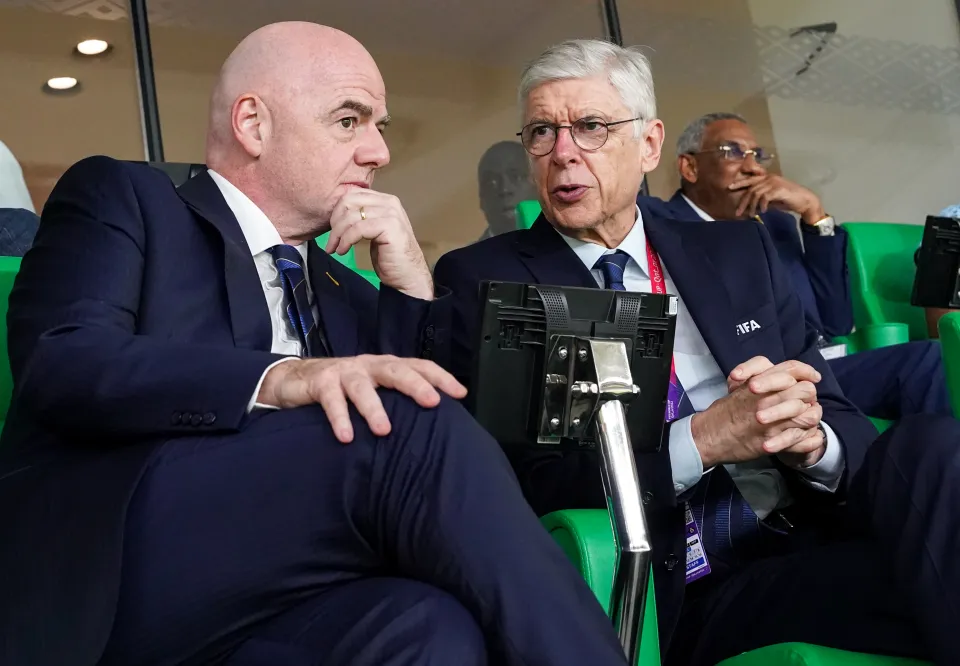
The controversy surrounding FIFA president Gianni Infantino has evolved from a disagreement over a financial proposal into one of the biggest leadership challenges of his presidency.
After shelving the highly controversial plan to sell stakes linked to the FIFA World Cup, Infantino is now working behind the scenes to prevent a wider political revolt from weakening his position ahead of the organization’s next presidential election.
As tensions spread throughout FIFA headquarters, Secretary General Mattias Grafstrom attempted to calm employees by acknowledging the seriousness of the recent events while encouraging them to remain focused on the organization’s core mission.
In a message sent to FIFA staff, Grafstrom described the controversy as “a sad and reproachable series of events,” emphasizing that the permanent abandonment of the FIFA Forward Enterprises (FFE) project should allow the governing body to move forward.
He urged employees not to allow political disputes to distract them from serving football and FIFA’s 211 member associations.
Grafstrom wrote: “We have all been thrown into the middle of a turmoil, which is difficult to comprehend and accept, but, as Secretary General, I urge you to remain focused on what has always united us: serving football and serving our 211 member associations.”
He stressed that despite the controversy, FIFA’s responsibilities remain unchanged and that the institution must continue operating professionally.
Grafstrom added: “A sad and reproachable series of events — which were thankfully concluded with the FFE project permanently abandoned — for as much as we feel dismayed by them, should not overshadow this reality.”
Recognizing the uncertainty created by the crisis, Grafstrom also sought to reassure FIFA employees that they would not become casualties of the political battle unfolding at the top of world football.
He promised that the administration would continue to support staff regardless of developments involving FIFA’s leadership.
His message stated: “I assure you that you as members of the administration, you will be defended and safeguarded from the political context we currently experience.”
He further encouraged employees to remain calm despite the instability.
“You do not need to worry.”
Grafstrom concluded with a reminder that leadership controversies are temporary, but FIFA’s broader mission extends far beyond individual office holders.
“Individuals, unstable moments and unfortunate episodes come and go.”
“The institution, its mission and its responsibility towards world football continue, and that is why we should always keep our professionalism, sense of perspective and composure.”
The withdrawal of the FIFA Forward Enterprises proposal may have ended one controversial project, but it has not ended the debate surrounding FIFA’s leadership.
Instead, it has exposed significant divisions among senior officials, continental football bodies and national associations regarding how football’s governing body should be managed and how commercial opportunities should be balanced with transparency and institutional independence.
The public criticism from Jordan FA president Prince Ali bin Al Hussein, combined with Arsene Wenger’s decision to distance himself from the proposal and reports that senior FIFA executives overwhelmingly opposed the plan internally, has intensified questions about Infantino’s authority.
At the same time, reports that key member associations have been reluctant to publicly rally behind the FIFA president suggest that support inside the global football community may not be as strong as it once appeared.
Although Infantino remains FIFA president, the events surrounding the abandoned World Cup investment proposal have reshaped the political landscape inside the organization.
With the next presidential election scheduled for March, provided he remains in office until then, the coming months are expected to be crucial in determining whether he can rebuild confidence among member associations and senior officials.
The emergency meetings in Rabat highlight the scale of the challenge facing the FIFA leadership. Restoring trust, improving transparency and repairing relationships with football’s major stakeholders may ultimately prove more difficult than withdrawing the proposal itself.
As football’s global governing body attempts to move beyond one of its most turbulent internal disputes in recent years, the decisions taken over the coming months could have lasting consequences not only for Gianni Infantino’s future, but also for the direction of FIFA as an institution.