Conflicting reports continue to emerge from South Kivu after the Congolese army announced that it had taken control of Minembwe Centre, a strategically significant locality in Fizi Territory, while AFC/M23 representatives insist that the area remains under the control of Twirwaneho fighters.
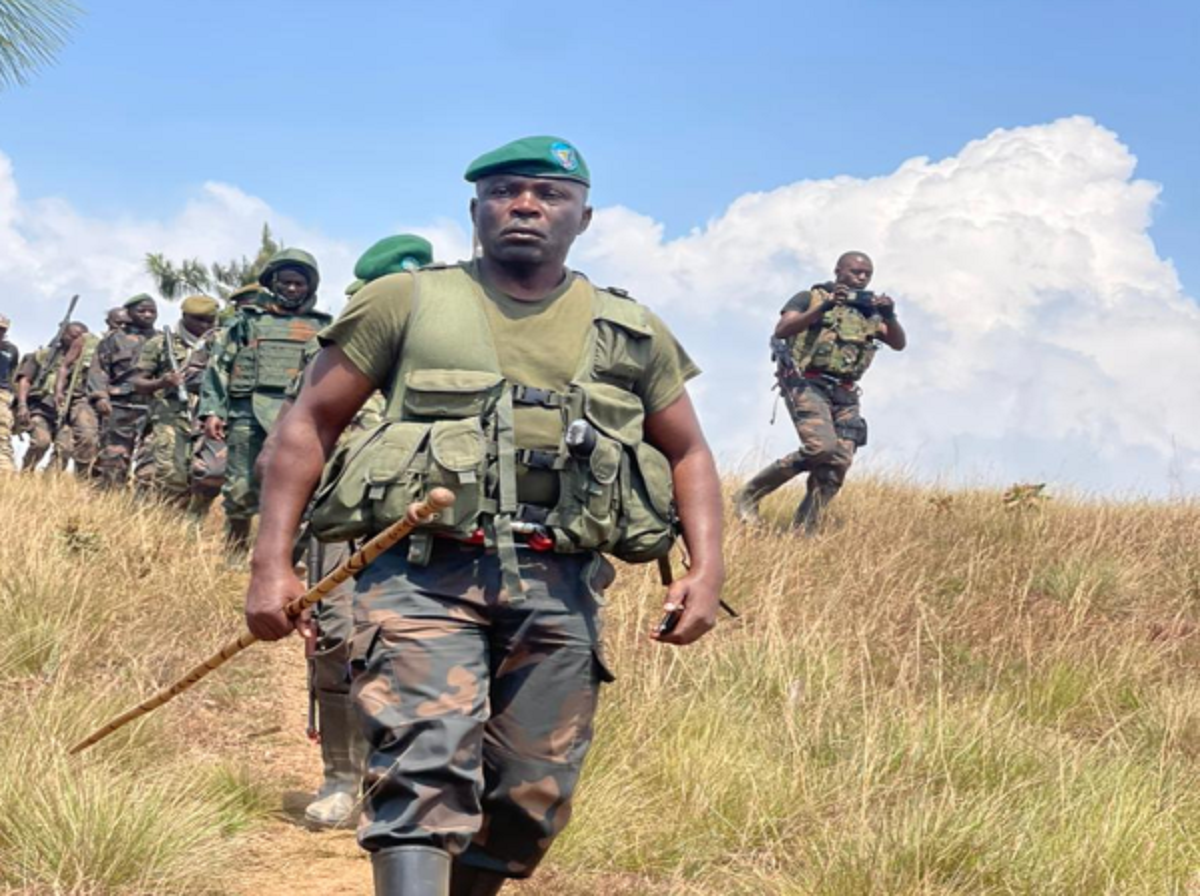
The controversy began after the Armed Forces of the Democratic Republic of Congo (FARDC), through Operation Sukola 2 spokesperson S/Lt Reagan Mbuyi Kalonji, declared that government troops had entered and secured Minembwe Centre during operations conducted on June 17, 2026.
According to the army, the advance followed intense military engagements targeting Twirwaneho fighters and their allies in the mountainous region of South Kivu.
However, AFC/M23 swiftly challenged the announcement. Speaking to journalists, Dr. Freddy Kaniki, AFC/M23’s Deputy Coordinator in charge of Economic and Financial Affairs, dismissed the claim and argued that government forces had not succeeded in taking the town.
“Regarding claims that they have captured Minembwe, I think they wish they had captured it. They have not captured it, and they never will,” he stated.
His remarks came as independent reports suggested that clashes were still ongoing around Minembwe and neighboring villages, with no clear confirmation that the strategic center had changed hands.
For more than a week, fierce fighting has been reported across the highlands of Minembwe. FARDC, supported by Burundian forces and Wazalendo militias, has reportedly launched large-scale operations aimed at dislodging Twirwaneho positions from the area.
Independent sources indicate that Ilundu village remains contested, with parts of the settlement reportedly controlled by government troops while other sections remain under Twirwaneho influence.
Despite FARDC’s declaration of victory, several local accounts maintain that Twirwaneho continues to exercise substantial control in and around Minembwe Centre.
Dr. Kaniki argued that the conflict in Minembwe cannot be viewed solely through a military lens. In his view, the fighting is rooted in longstanding political and historical grievances involving the Banyamulenge community.
“The only reason there is fighting there is because there are residents living there who are not wanted, who are undesired, and who must be erased from the map,” he said.
He further claimed that, unlike many conflicts elsewhere in the Democratic Republic of Congo that are often linked to competition over mineral resources, the violence in Minembwe is tied to deeper questions of identity, citizenship, and belonging.
According to Kaniki, tensions in the area stretch back decades and are connected to disputes over the status and rights of the Banyamulenge population.
He also accused authorities in Kinshasa of pursuing policies aimed at marginalizing the community, while insisting that local residents would continue resisting what they perceive as existential threats.
“The Banyamulenge will not remain silent or allow themselves to be killed like sheep being led to the slaughterhouse,” he declared.
Meanwhile, civilians remain caught in the middle of the conflict. Reports from the region suggest that drone strikes and heavy military operations have caused civilian casualties and heightened fears among local residents.
Analysts note that Minembwe remains one of the most sensitive areas in South Kivu because of its complex history, demographic composition, and strategic significance.
As both sides continue to offer competing narratives regarding the situation on the ground, the true status of Minembwe Centre remains difficult to verify independently. What is clear, however, is that fighting continues and that uncertainty persists over who effectively controls one of the most contested locations in South Kivu.