As fighting and political tensions continue to shape the future of eastern Democratic Republic of Congo, Burundian President and current African Union Chairperson Evariste Ndayishimiye has once again found himself at the center of a growing debate over peace, security, and regional responsibility.
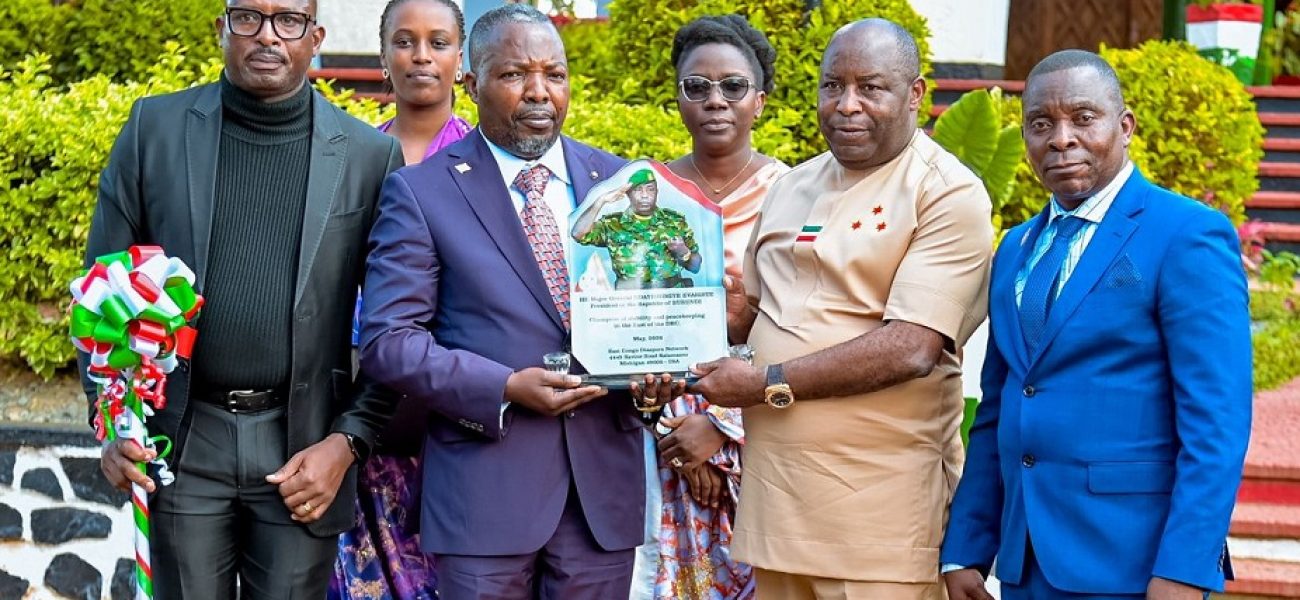
The discussion intensified after a delegation from East Congo Diaspora met President Ndayishimiye at the presidential palace in Gitega and honored him for what they described as his unwavering commitment to peace efforts in eastern Congo.
The delegation was led by Pastor Joshua Kibezi Munonge, a representative of East Congo Diaspora, an organization based in the United States that promotes investment and economic development initiatives in eastern Congo.
During the meeting, the delegation presented President Ndayishimiye with a portrait as a symbolic gesture of appreciation.
According to a statement released by the Burundian Presidency, the gift was intended to recognize “his continued dedication to promoting peace, security, and reconciliation in eastern Democratic Republic of Congo.”
Pastor Joshua Kibezi Munonge praised Ndayishimiye’s leadership and highlighted his engagement with communities affected by conflict. He also expressed gratitude to the people of Burundi for hosting Congolese refugees fleeing violence across the border.
In remarks that attracted considerable attention, Munonge declared that “the current and future generations of eastern DRC will remember President Ndayishimiye as a man of peace who played a major role in finding a lasting solution to the region’s security challenges.”
While supporters view these comments as a reflection of Burundi’s contribution to regional stability, critics argue that the president’s legacy remains far more complicated.
For years, Burundi has faced accusations from Rwanda and various international observers regarding its alleged involvement with armed groups operating in eastern Congo. These allegations have repeatedly surfaced in discussions surrounding the security crisis affecting the Great Lakes region.
Among the most serious claims are allegations of cooperation with the FDLR, an armed group composed in part of individuals linked to the perpetrators of the 1994 Genocide against the Tutsi in Rwanda and their successors. Rwandan authorities have consistently argued that any collaboration with the group represents a direct threat to regional security.
Burundi has also been mentioned in reports concerning the FLN, another armed movement accused of carrying out deadly attacks inside Rwanda in previous years. Critics have claimed that Burundian territory was at times used as a transit route or operational base by members of the group.
At the same time, Burundian troops have been actively involved in military operations in eastern Congo alongside the Congolese army, FARDC, and local armed groups known as Wazalendo. Their common objective has been to counter the AFC/M23 coalition, which controls significant territories in eastern Congo.
Supporters of Burundi’s military deployment argue that it has helped Kinshasa resist further territorial losses and strengthened efforts to confront armed insurgencies. Others contend that the growing number of foreign and local armed actors has prolonged the conflict, increased civilian suffering, and complicated prospects for a negotiated political settlement.
Human rights organizations and community representatives from parts of South Kivu have also raised concerns over allegations of abuses committed by various armed actors participating in the conflict, including operations affecting Banyamulenge communities and other civilians.
Against this backdrop, the tribute offered by East Congo Diaspora highlights the sharp contrast in perceptions surrounding President Ndayishimiye’s regional role.
To some, he represents a leader committed to dialogue, refugee protection, and conflict resolution. To others, questions remain about Burundi’s military and political involvement in one of Africa’s most complex security crises.
Whether history ultimately remembers Evariste Ndayishimiye as a peacemaker or as a controversial actor in the Congo conflict will depend largely on how the region’s search for lasting peace unfolds in the years ahead. His legacy, like the future of eastern Congo itself, remains a story still being written.