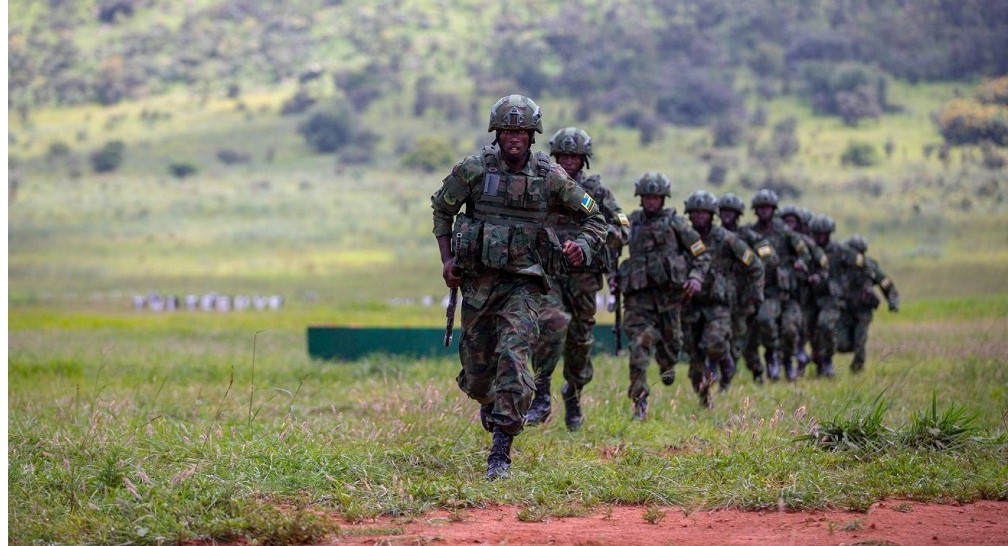
Prospects for peace in eastern Democratic Republic of the Congo received renewed attention after U.S. Secretary of State Marco Rubio suggested that Rwandan troops could begin leaving the region within weeks, even as Washington continues to intensify pressure on actors accused of prolonging the conflict.
Speaking before the U.S. House Foreign Affairs Committee, Rubio acknowledged that implementation of the peace agreement signed between Rwanda and the DRC has been uneven, but said there are signs of movement.
“As for the DRC and Rwanda, they signed a peace agreement. Unfortunately, it is not being well respected. We had to impose some sanctions,” Rubio told lawmakers.
He noted that Washington has observed what he described as growing compliance from Rwanda regarding commitments made under the agreement.
“On the Rwandan side, we are starting to observe a certain respect for the agreement. Things are moving forward—not fast enough, certainly, but we hope that the withdrawal of Rwandan troops from the region will take effect by mid-next month. Of course, the M23 issue still remains to be resolved,” he added.
Rubio’s remarks came shortly after the U.S. Treasury announced fresh sanctions against John Imani Nzenze, identified as M23’s intelligence chief, and Gustave Kubwayo, a senior commander within the Democratic Forces for the Liberation of Rwanda (FDLR).
According to Washington, both men play influential roles in armed movements that continue to destabilize eastern Congo.
The measures form part of a broader U.S. strategy aimed at enforcing the Washington peace framework signed by Rwanda and the DRC in late 2025.
In recent months, the sanctions campaign has expanded significantly. Former Congolese President Joseph Kabila was sanctioned in April over allegations that he provided political and financial backing to M23 and its allied AFC coalition.
U.S. officials further alleged that Kabila supported rebel financing efforts, encouraged defections from the Congolese military and attempted to shape political developments in Kinshasa while residing in Goma.
Sanctions have also remained in place against AFC leader Corneille Nangaa and M23 military commander Sultani Makenga, both accused by Washington of directing military operations and efforts aimed at challenging the authority of the Congolese government.
Earlier in March, the United States increased pressure by targeting senior Rwanda Defence Force officers, alleging direct military, logistical and financial assistance to M23 activities in eastern Congo.
American officials maintain that both M23 and FDLR continue to represent major barriers to peace despite repeated ceasefire agreements and mediation initiatives involving Qatar, the United States and regional African leaders.
Eastern Congo remains at the center of one of the world’s most severe humanitarian crises. M23 continues to control large portions of North and South Kivu, including the strategic cities of Goma and Bukavu.
Years of fighting have displaced millions of civilians, disrupted regional commerce and affected international mineral supply chains.
While Rubio’s comments indicate that Washington sees some encouraging developments in the peace process, particularly regarding Rwanda’s commitments, he emphasized that resolving the M23 question remains essential to achieving lasting stability.
The Government of Rwanda consistently denies these allegations of supporting M23 and deploying its troops to the eastern Democratic Republic of Congo (DRC), stating that these actions by the United States are biased.
Furthermore, Rwanda emphasizes that what is truly needed is for the DRC and the international community to completely eradicate the FDLR, a rebel group opposed to the Kigali administration.
This group includes individuals responsible for the 1994 Genocide against the Tutsi and currently works closely with the DRC armed forces (FARDC).
The Rwanda Defence Force reinforces that they remain on high alert along the borders and have implemented all necessary defensive measures to ensure no one violates the country’s sovereignty.