More than three decades after the plane carrying Rwandan President Juvénal Habyarimana was shot down, one question continues to shape debates about the events that led to the 1994 Genocide against the Tutsi: who was truly responsible?
For years, political opponents of Rwanda’s current leadership and former officials linked to the regimes of Habyarimana and the self-proclaimed Interim Government have promoted claims that the Rwanda Patriotic Front (RPF) carried out the attack.
Yet a growing body of evidence from intelligence reports, diplomatic archives, and historical investigations points in a different direction.
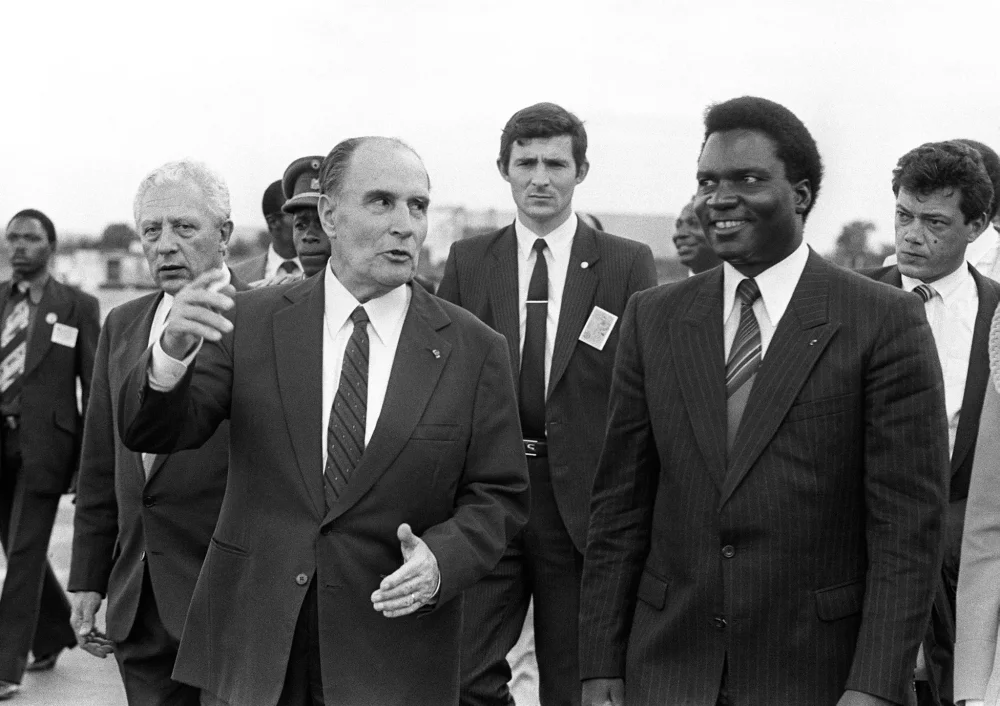
One of the most striking pieces of evidence comes from former French President François Mitterrand, whose government was one of Habyarimana’s closest international allies.
During a French Cabinet meeting on June 22, 1994, Mitterrand reflected on the situation in Rwanda and suggested that the assassination may not have benefited the RPF at all. According to records from the meeting, he argued that the Arusha Peace Agreement had already positioned the RPF to enter government institutions and share power.
He stated: “We supported the legitimate government while urging it to negotiate with the rebels. We worked to promote understanding between Hutus and Tutsis through the Arusha talks. The agreements reached appeared satisfactory to the Tutsis, who seemed close to entering government, but the killing of the President may have been carried out by Hutu hardliners.”
The statement revealed that even within the French leadership there were doubts about accusations directed at the RPF.
At the time of the attack, implementation of the Arusha Accords was already underway. Hundreds of RPA soldiers had been deployed to the CND building in Kigali to protect RPF politicians who were expected to participate in a transitional government. Plans were also advancing for power-sharing arrangements and military integration between government forces and the RPA.
From a strategic perspective, the RPF had little incentive to derail a process that was bringing it closer to political power.
Another significant source emerged from a classified CIA assessment. The report reportedly concluded that extremist elements within the Hutu power structure, particularly members of the presidential guard, possessed both the means and the motivation to carry out the attack. According to the assessment, these networks had access to anti-aircraft weapons and French-made missiles capable of bringing down the presidential aircraft.
Additional details were later explored by investigative journalist Andrew Wallis in his book, “Stepp’d in Blood: Akazu and The Architects of the Rwandan Genocide Against The Tutsi.”
Wallis argues that members of the influential Akazu circle feared losing their grip on power as Habyarimana moved closer to implementing the Arusha Agreement. According to his research, the president had begun discussing the formation of a broader government that would include figures outside the traditional inner circle.
On Easter Monday, April 4, 1994, Habyarimana reportedly instructed his chief of staff, Enoch Ruhigira, to prepare arrangements for a swearing-in ceremony for a new government. The proposed administration was expected to include a wider range of political actors rather than remaining dominated by Akazu loyalists.
Wallis writes that the announcement alarmed key members of the network. An emergency meeting was reportedly convened involving influential military officers and members of Habyarimana’s extended family. According to the account, discussions centered on preventing political changes that threatened their influence, with the president’s return flight from Tanzania becoming a focal point.
The destruction of Habyarimana’s aircraft on April 6, 1994, triggered one of the darkest chapters in modern history. Within hours, the Genocide against the Tutsi began, claiming more than one million lives in approximately one hundred days.
France’s role during the crisis has remained controversial. Although Mitterrand maintained that French forces should focus on protecting civilians rather than engaging in combat, critics have long argued that French military involvement extended beyond humanitarian objectives.
Operation Turquoise, involving approximately 2,500 French troops deployed in southwestern Rwanda, remains a subject of intense historical debate. Critics contend that the operation enabled some members of the former Rwandan army and Interahamwe militias responsible for genocide crimes to escape into what was then Zaire, carrying weapons with them.
While legal and political arguments surrounding the downing of Habyarimana’s plane continue, documents released over the years increasingly highlight a pattern suggesting that those most threatened by the Arusha Peace Agreement may also have been those with the strongest motive to eliminate the man who had signed it.
As historians continue to examine newly available records, the narrative that Hutu hardliners orchestrated the attack has gained increasing attention, raising fresh questions about what key international actors knew—and when they knew it.
François Mitterrand passed away in Paris, France on January 8, 1996, at the age of 79, due to prostate cancer.He served as the President of France from 1981 to 1995.
In Rwandan history, he is known for being a close ally of President Juvénal Habyarimana’s regime, and his administration is heavily implicated in having a role and complicity in various actions related to the 1994 Genocide against the Tutsi.