Rwanda and Mozambique have moved to reinforce their military partnership in Cabo Delgado after the Mozambican government agreed to finance Rwanda’s security mission, following growing uncertainty over continued European Union support.
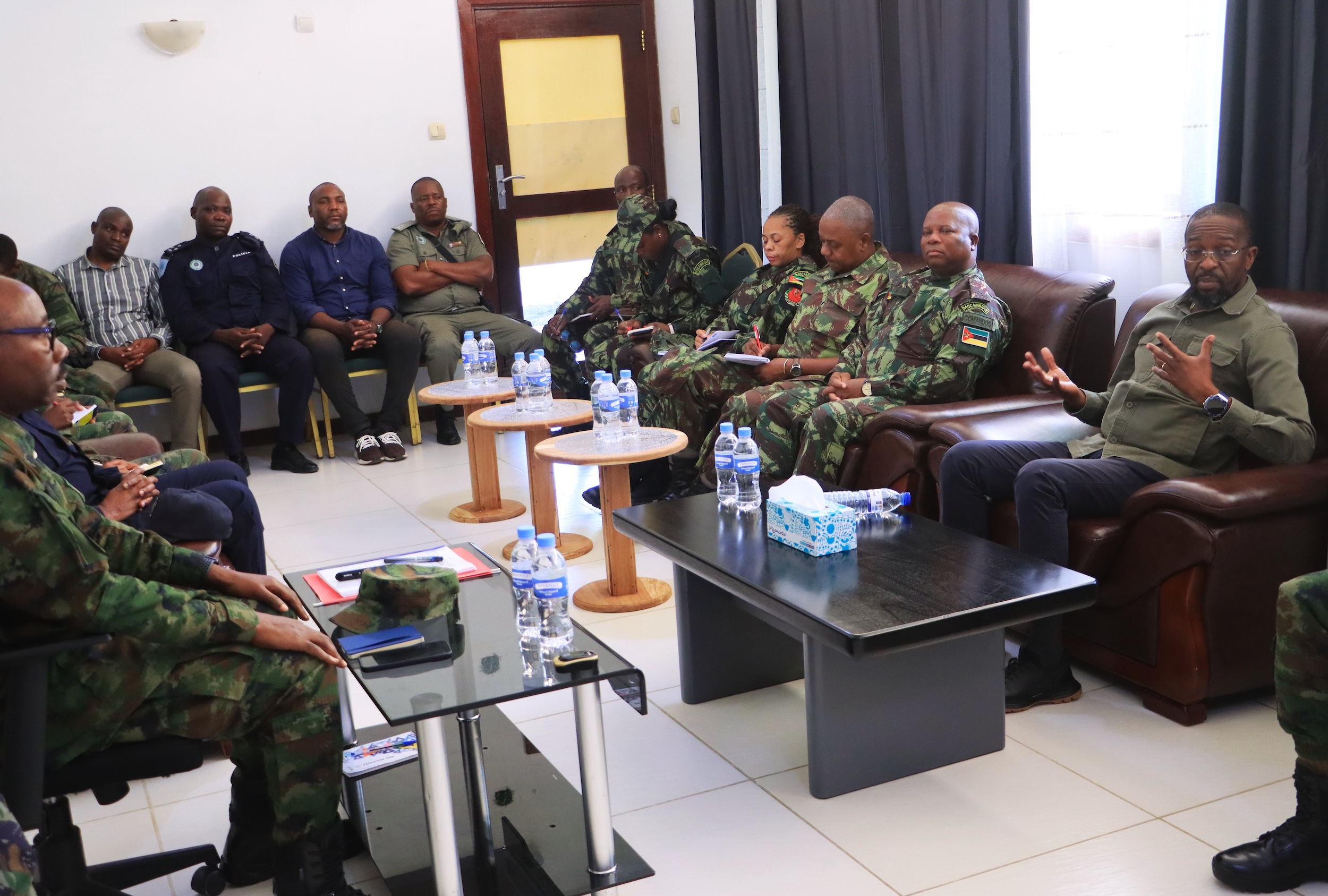
The development came as Mozambique’s Minister of Defence, Cristóvão Artur Chume, visited Rwanda Security Force troops stationed in Mocímboa da Praia, one of the areas that once served as a stronghold for insurgent fighters in northern Mozambique.
The minister was accompanied by Brigadier General Tomás Francisco João Mponha, Deputy Army Commander of the Mozambique Armed Forces (FADM), along with senior military officials.
They were received at the Rwanda Security Force headquarters by the Joint Task Force Commander, Brigadier General CM Mujuni, who briefed the delegation on the current security situation and ongoing military operations across Cabo Delgado Province.
During the visit, Minister Chume praised Rwanda’s role in helping Mozambique restore stability in the region and combat terrorism that has plagued Cabo Delgado since 2017.
He also emphasized Mozambique’s commitment to strengthening bilateral relations and long-term security cooperation with Rwanda.
The visit came only days after Rwanda’s Minister of Foreign Affairs, Amb. Olivier Nduhungirehe, announced that Kigali and Maputo had reached an agreement allowing Mozambique to directly support the Rwandan mission financially.
Rwanda says the decision followed frustrations with the European Union, which had previously contributed €20 million through the European Peace Facility (EPF) but is now reconsidering its support.
In a statement released on May 19, 2026, Nduhungirehe defended the achievements of Rwanda’s deployment in Cabo Delgado.
He said: “In 2021, Rwanda’s security forces deployed to Cabo Delgado at the invitation of the Government of Mozambique. Over the last five years, the mission has been successful: peace and stability returned, families went back home, children returned to school, businesses reopened, Mozambique’s army received training, and American and European companies resumed their $50 billion gas investments in a secure environment.”
The minister stressed that European financial assistance represented only a small portion of Rwanda’s overall operational costs in Mozambique.
He added: “At the same time, Rwanda’s security forces received financial support from the European Peace Facility, which represented only a small share of Rwanda’s total expenditure in Mozambique and compared to the EU’s own economic interests in Cabo Delgado.”
Nduhungirehe accused some European countries of turning the mission into a political bargaining tool.
He stated: “Unfortunately, Rwanda observed that two requests submitted to the EU were met with hesitation and politicized by some member states, including two former colonial powers. Essential support provided to the people of Mozambique was transformed into leverage against Rwanda, while countries benefiting economically from stability in Cabo Delgado undermined our contribution.”
His remarks followed comments made by the EU Ambassador to Mozambique, Antonino Maggiore, who suggested that Brussels was now prioritizing military training for Mozambican forces rather than continued financial backing for Rwanda’s deployment.
“We are currently in discussions because the mission has now lasted four years and the question is how it can evolve. The final decision will be made collectively by the 27 EU member states,” Maggiore said.
Asked directly whether the EU would continue funding the Rwanda Security Force mission, he responded: “For now, the answer is no.”
Rwanda warned earlier that it could reconsider its deployment if political pressure and sanctions continued to overshadow the mission.
Nduhungirehe argued that Rwanda’s troops were not only serving Mozambique but also protecting broader international interests tied to investments and regional stability.
Since Rwanda first deployed forces to Cabo Delgado in July 2021, the joint operations have helped retake several strategic towns, restore civilian life, and reopen economic activities in areas previously devastated by insurgent violence.