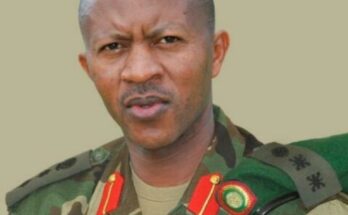
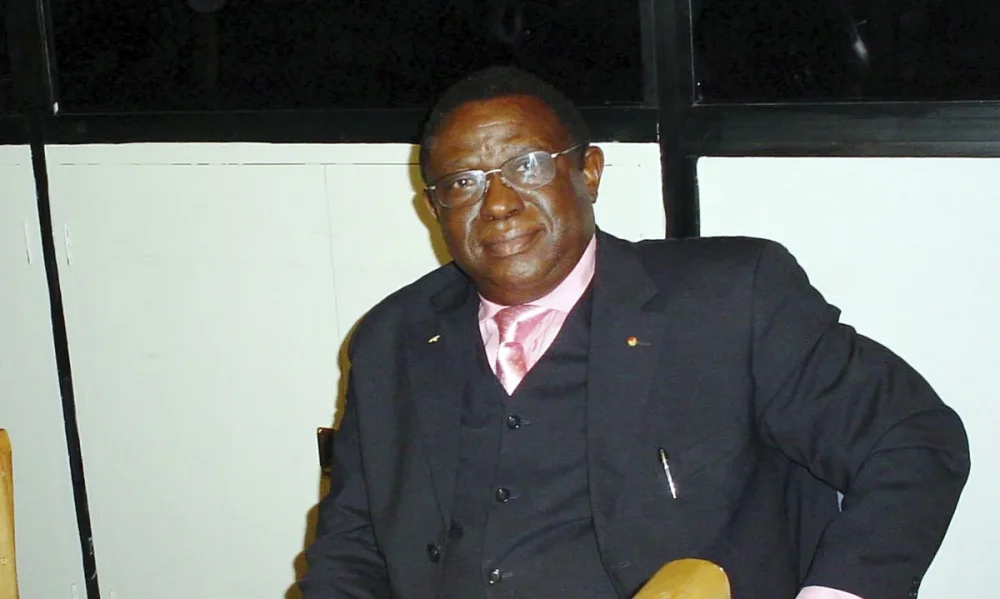
More than three decades after the 1994 Genocide against the Tutsi, new testimonies continue to shed light on critical decisions made during the chaotic hours that followed the assassination of President Juvénal Habyarimana. Among those offering fresh insight is Alphonse Senyoni, a former military secretary who says he personally handled the official minutes of a high-level military meeting that nearly elevated Théoneste Bagosora to the presidency.
Senyoni, now serving as Secretary of Rwanda’s Demobilization and Reintegration Commission (RDRC), explained that his military career began in 1984 when he joined the former Rwandan Armed Forces (FAR). After receiving specialized training in military administration abroad, he returned to Rwanda and worked in senior military secretariat positions, giving him access to important government and military records.
According to his account, the evening of April 7, 1994 was marked by uncertainty and power struggles following the downing of Habyarimana’s aircraft the previous night. Senior military officers convened an emergency meeting to determine how the country would be governed after the president’s death.
Although Senyoni did not participate directly in the meeting, he was responsible for typing and processing its official records. The documents, he says, indicated that participants had agreed to appoint Théoneste Bagosora as Rwanda’s next president.
However, that decision quickly encountered resistance. French military advisers working with the Rwandan army reportedly reviewed the meeting’s minutes and warned senior officers that appointing Bagosora could fuel accusations that those behind the military leadership were involved in the downing of Habyarimana’s plane and the subsequent seizure of power.
Faced with that concern, military leaders reconsidered their decision and turned instead to constitutional procedures. Since Prime Minister Agathe Uwilingiyimana had already been killed, attention shifted to Théodore Sindikubwabo, who was then Speaker of Parliament and next in line under the existing legal framework.
Senyoni described the atmosphere within the presidential guard as deeply fractured and confused. Different factions reportedly disagreed over political loyalties and regional affiliations while violence was already spreading across Kigali.
He recalled that the soldiers sent to bring Sindikubwabo from Butare appeared convinced that he was being summoned to face death rather than assume national leadership. As a result, they transported him under humiliating and unsettling conditions. Upon arriving in Kigali, Sindikubwabo himself reportedly feared for his life until a radio announcement later confirmed that he had become the country’s new president.
The testimony offers a rare glimpse into the uncertainty that characterized the first hours following Habyarimana’s death. It suggests that Rwanda’s political transition during those critical moments was not predetermined and that competing options were being discussed behind closed doors while the genocide was rapidly unfolding across the country.
Following the genocide, Senyoni fled to what is now the Democratic Republic of Congo, where he remained for many years before returning to Rwanda in 2010. He says his return marked the beginning of a new chapter, one that allowed him to reintegrate into public service and contribute to national reconstruction efforts.
Today, after spending more than a decade working with Rwanda’s demobilization and reintegration programs, Senyoni says his experience has strengthened his belief in reconciliation, unity, and peaceful coexistence.
He continues to encourage former combatants and Rwandans living abroad to return home and participate in the country’s ongoing development, while urging citizens to preserve the unity that has helped Rwanda rebuild after one of the darkest chapters in its history.