
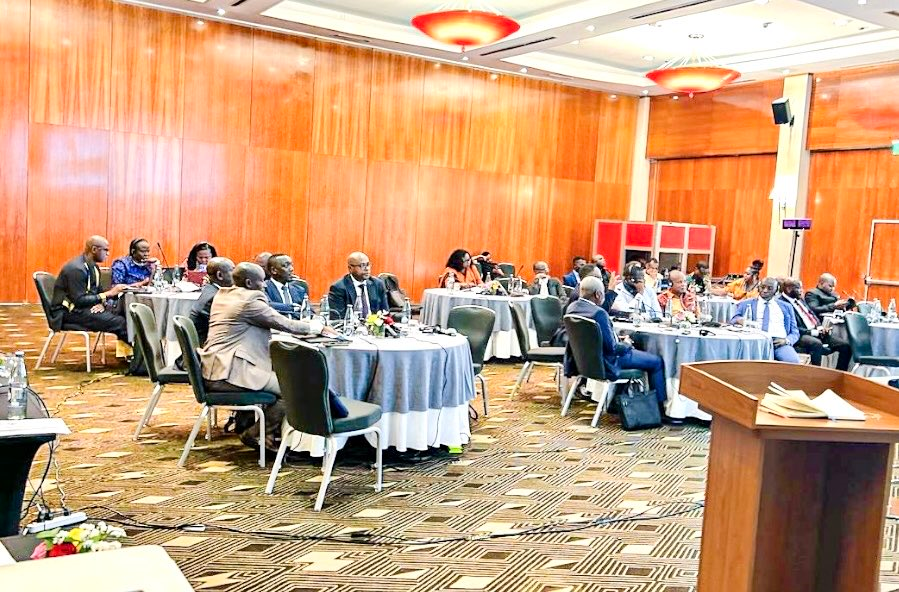
A significant diplomatic process aimed at addressing one of the Great Lakes region’s longest-running humanitarian challenges is underway in Addis Ababa, Ethiopia, where Rwanda and the Democratic Republic of Congo (DRC) have launched discussions focused on the voluntary return of refugees.
The talks, which began on June 20 and continue through June 21, 2026, bring together representatives from both governments alongside officials from the United Nations High Commissioner for Refugees (UNHCR). The objective is to develop practical mechanisms that will allow refugees wishing to return home to do so safely, voluntarily and with dignity.
Rwanda’s delegation is led by Aristarque Ngoga, Permanent Secretary in the Ministry in charge of Emergency Management. Technical experts from the DRC and UNHCR are also participating in the discussions, which are expected to lay the groundwork for a ministerial-level meeting scheduled for June 22, 2026.
That high-level meeting will review recommendations emerging from the technical sessions and determine the next steps toward implementing a comprehensive refugee repatriation framework.
The current initiative builds on commitments reached in July 2025, when Rwanda, the DRC and UNHCR agreed to strengthen cooperation on the voluntary return of both Congolese and Rwandan refugees.
The process is rooted in a tripartite agreement signed on February 17, 2010, but has gained renewed momentum following recent regional peace efforts. These include the Washington Peace Agreement signed between Rwanda and the DRC on June 27, 2025, as well as the Doha Principles agreed upon by the DRC and the AFC/M23 coalition on July 19, 2025.
Both frameworks emphasize the right of refugees and internally displaced persons to return home voluntarily, safely and under conditions that respect their dignity and fundamental rights.
One of the major themes discussed in Addis Ababa is the need to build confidence among refugees and host communities. Participants agreed that transparent communication will be essential to ensure that refugees receive accurate information regarding return procedures and conditions in their areas of origin.
Technology is expected to play a central role in information-sharing efforts, helping authorities combat misinformation while promoting trust throughout the repatriation process.
The discussions also highlighted the importance of support from international donors, financial institutions and development partners. Stakeholders agreed that successful repatriation requires more than transportation back home; it must include long-term reintegration and recovery programs.
Under the proposed framework, returning refugees would receive support in areas such as housing, education, healthcare, civil registration and access to national development programs designed to help them rebuild their lives.
Analysts view the initiative as a potentially transformative step toward sustainable solutions for displacement in the region. By combining repatriation efforts with reintegration support, authorities hope to reduce the risk of renewed displacement and provide refugees with a genuine opportunity to start over.
Rwanda currently hosts more than 136,000 refugees, including nearly 100,000 from the Democratic Republic of Congo. Many of them have spent years away from their homes due to recurring insecurity and conflict in eastern DRC.
If the outcomes of the Addis Ababa discussions and the ministerial meeting scheduled for June 22 are successfully implemented, they could mark a major breakthrough in regional efforts to resolve displacement challenges and offer thousands of refugee families a realistic path toward a stable future in their countries of origin.