President Félix Tshisekedi of the Democratic Republic of Congo once again sought to use an international platform to accuse Rwanda over the long-running insecurity in eastern Congo, but his unexpected trip to Nairobi appears to have ended without the diplomatic impact his administration had anticipated.
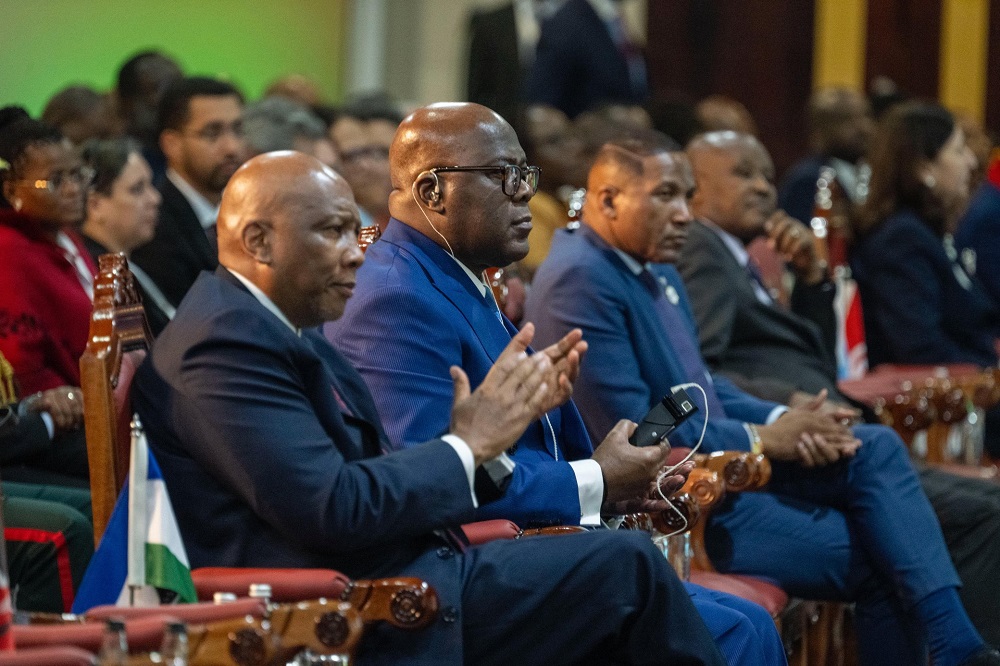
On May 12, 2026, during the final day of the Africa-France Summit held in Nairobi, Tshisekedi abruptly left Uganda, where he had attended the inauguration ceremony of President Yoweri Kaguta Museveni, and flew directly to Kenya.
The sudden move surprised many observers following the inauguration events, as most expected the Congolese leader to return to Kinshasa after the ceremony alongside other visiting heads of state.
Instead, Tshisekedi appeared determined not to let the Africa-France Summit conclude without making another attempt to rally international attention around Congo’s accusations against Rwanda.
His spokesperson, Tina Salama, stated that the Congolese president had not traveled to Nairobi “to complain,” but rather to urge the international community to stop remaining silent while, according to Kinshasa, massacres had continued in eastern Congo for more than three decades “because of Rwanda’s aggression.”
Two days after the summit ended, on May 14, presidential spokesperson Farah Muamba Kayowa reiterated the same narrative, claiming that the DRC had participated in the Africa-France leaders’ summit and had appealed to the international community not to remain silent about killings allegedly linked to “Rwandan aggression.”
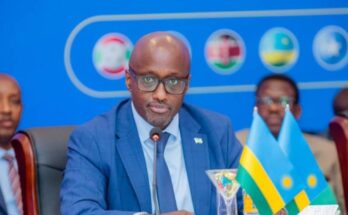
However, those claims were strongly disputed by Rwanda’s Minister of Foreign Affairs and International Cooperation, Ambassador Olivier Nduhungirehe, who attended the Nairobi meetings.
According to Nduhungirehe, Congolese representatives were absent from the summit’s key working sessions, making it impossible for Kinshasa to formally present the accusations it later claimed to have raised.
He explained: “There was a discussion on environmentally friendly industries and energy transition reforms, another on reforms of international financial institutions, and a third on peace and security. They were constructive and interactive discussions involving heads of state.”
The Rwandan minister added that throughout all three sessions, the seat reserved for the DRC delegation remained empty, suggesting that Tshisekedi’s hurried trip may not have unfolded according to plan.
“During all three discussions, the DRC seat remained empty,” Nduhungirehe stated. “As a result, Kinshasa was unable to make any request or accuse anyone in Nairobi, and instead only symbolically showed that the president had attended near the end of the summit.”
His remarks immediately fueled questions about the organization of Tshisekedi’s visit and whether the Congolese delegation had failed to secure meaningful participation in the summit’s main deliberations.
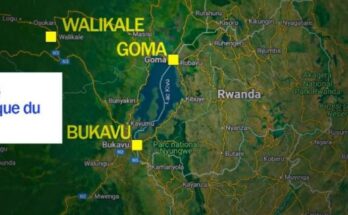
Regional political analysts say the Congolese government has increasingly used international forums to amplify accusations against Rwanda, particularly regarding the conflict involving the AFC/M23 coalition in eastern Congo.
Rwanda has repeatedly rejected those accusations, arguing that eastern Congo’s instability is rooted in decades of failed governance, political exclusion, economic collapse, and the unchecked proliferation of armed groups.
Kigali also continues to point to the presence of the FDLR militia in eastern Congo, a group composed largely of remnants of the former Rwandan army and Interahamwe fighters responsible for the 1994 Genocide against the Tutsi.
Rwandan authorities maintain that the group was initially sheltered under the regime of Mobutu Sese Seko and has continued operating inside Congolese territory ever since.
The Rwandan government further accuses Kinshasa of providing logistical and military cooperation to the FDLR in its fight against AFC/M23 forces, something Kigali considers a direct threat to Rwanda’s national security.
The diplomatic dispute comes as eastern Congo remains trapped in a deepening security crisis, despite ongoing regional peace initiatives aimed at finding a lasting political settlement between Kinshasa and armed opposition movements.
Although Tshisekedi attempted to use the Nairobi summit as another stage to intensify pressure on Rwanda, the absence of Congolese representatives from the summit’s core discussions ultimately undermined the effort before it could gain momentum.