Across the United States, measles is making an alarming comeback. After a surge in West Texas this spring, health experts are now warning of a second wave hitting multiple states.
According to the US Centers for Disease Control and Prevention (CDC), 84 new measles cases were reported nationwide in the past week. This is the highest weekly total since April, when cases were averaging around 100 per week.
Texas has reported no new cases since mid-August, when state officials declared the outbreak there over. But other states are now seeing rapid increases, especially South Carolina.
In South Carolina, state health authorities have placed more than 250 people under quarantine after possible exposure to the virus. Sixteen people are currently in isolation because they have become sick.
Dr. Linda Bell, the state epidemiologist, said some people are quarantined for a second time. “This is a reminder that the maximum incubation period for measles is 21 days,” Bell explained. “For anyone to go through that quarantine twice is a significant burden.”
Bell stressed the importance of vaccination. “Vaccination continues to be the best way to prevent the disruption that measles is causing to people’s education, to employment, and other factors in people’s lives in our communities.”
The number of cases in South Carolina is rising at a worrying pace. Bell pointed to holiday gatherings, travel, and lower vaccination rates as key factors behind the surge.
Since October, South Carolina has reported 111 measles cases. Shockingly, at least 105 of these cases occurred in people who had never received the measles-mumps-rubella (MMR) vaccine.
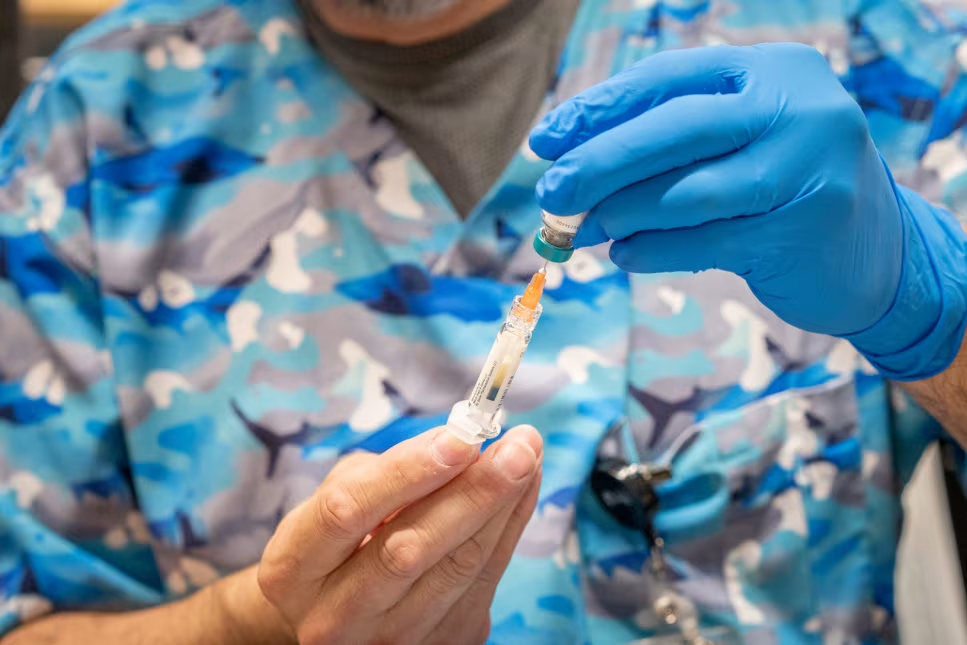
Health experts recommend two doses of the MMR vaccine during childhood. This provides about 97% protection against measles infection, making it one of the most effective ways to stop the virus.
Most cases in South Carolina are in the upstate region near Greenville. Many new cases are linked to exposures at a local church. Schools and medical facilities have also seen outbreaks.
“The majority of our cases stem from exposures in known settings,” Bell said. “But each new case in an undervaccinated population can trigger even more cases because the disease is highly contagious.”
Bell emphasized that rapid vaccination coverage is essential to stop the spread. “Increasing vaccination quickly is the key to containing this outbreak,” she added.
Measles is also growing in Utah and Arizona. The outbreak along the Utah-Arizona border has been active for months, with Arizona reporting 176 cases and Utah reporting 115.
Overall, 2025 has already been a record year for measles in the US. Between January and July, nearly 1,300 cases were reported, the most in any year since measles was declared eliminated in the country over 25 years ago.
Now, more than 1,900 cases have been confirmed nationwide. Most of the infections are among unvaccinated individuals, highlighting the ongoing risk posed by low vaccination rates.
If outbreaks continue into January, the US risks losing its measles elimination status, similar to what Canada experienced last month.
In total, there have been 47 separate measles outbreaks in the US this year, nearly three times the number reported in 2024. The CDC defines an outbreak as three or more related cases.
The human toll has been severe. Over 200 people have been hospitalized due to measles, and three people, including two children, have died.
Health officials continue to urge parents and communities to ensure that children receive both doses of the MMR vaccine. “This is not just about protecting yourself,” Dr. Bell warned. “It’s about protecting your family, your neighbors, and your entire community.”
Measles spreads easily in places where vaccination rates are low. Each unvaccinated person can come into contact with dozens of others, creating a chain of infection that grows rapidly.
Travelers are also at risk. Anyone visiting areas with active outbreaks should check their vaccination status. The CDC recommends MMR vaccination for all international travelers.
Public health experts fear that continued outbreaks could strain healthcare systems and disrupt schools and workplaces. Quarantines, while necessary, create long-term disruptions for families and communities.
“Measles is not a disease of the past,” Dr. Bell said. “It can return quickly if we let our guard down. Vaccination remains our best defense.”
Communities across the US are being urged to act immediately. Clinics are extending hours for vaccinations, and public awareness campaigns are increasing. Health authorities hope that swift action can prevent further cases and deaths.
The current surge is a stark reminder that even eliminated diseases can return if vaccination coverage falls. The coming weeks will be critical in stopping the spread of measles across the country.