The war tensions in the Middle East have reached a dangerous new level as the United States continues its massive military campaign against Iran. Strong statements from US President Donald Trump and dramatic events across the region have created fear that the conflict could grow even larger.
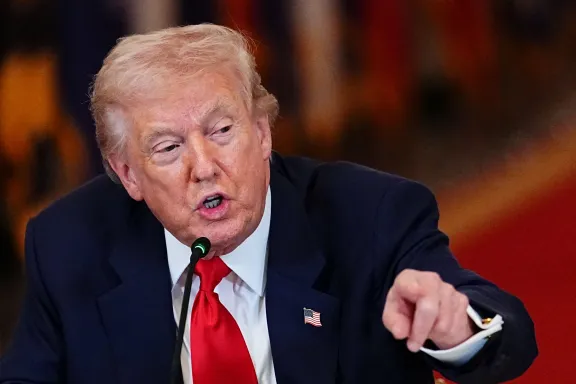
Donald Trump has vowed that Iran will be “hit very hard,” warning that even more powerful attacks could be coming. The US president criticized Iran heavily and described the country as the “loser of the Middle East” after its government issued an apology for attacks on neighboring countries.
Trump made the comments in a fiery post on his social media platform Truth Social. He said Iran had been severely damaged after days of heavy airstrikes by the United States and Israel against Iranian military targets.
According to Trump, the Iranian government had finally been forced to step back after facing intense pressure. He wrote: “Iran, which is being beat to HELL, has apologized and surrendered to its Middle East neighbors, and promised that it will not shoot at them anymore.”
He continued by saying that the apology only happened because of the powerful military campaign carried out by the United States and Israel. Trump said the attacks were necessary to stop Iran from trying to dominate the region.
“This promise was only made because of the relentless U.S. and Israeli attack. They were looking to take over and rule the Middle East. It is the first time that Iran has ever lost, in thousands of years, to surrounding Middle Eastern Countries,” Trump wrote.
Despite the apology from Tehran, the US president warned that the situation is far from over. Trump added another strong warning in the same message, saying: “Today Iran will be hit very hard!”
He also hinted that more targets could soon be attacked. According to Trump, areas and groups that were previously not considered for attacks may now be included because of what he called Iran’s “bad behavior.”
Trump mocked Iran’s weakened position and declared that the country had lost its power in the region. He wrote: “Iran is no longer the ‘Bully of the Middle East,’ they are, instead, ‘THE LOSER OF THE MIDDLE EAST,’ and will be for many decades until they surrender or, more likely, completely collapse!”
These threats came shortly after Iran’s president Masoud Pezeshkian issued an unexpected apology for recent attacks on neighboring countries in the Gulf region.
In a televised speech on Iranian state television, Pezeshkian admitted that Iranian forces had carried out strikes on nearby countries and expressed regret.
“I deem it necessary to apologise to neighbouring countries that were attacked,” he said during the broadcast.
The Iranian president suggested that some of the attacks might have been caused by confusion inside the country’s military command.
He explained that communication problems within Iran’s armed forces could have led to unintended strikes against neighboring states.
Pezeshkian tried to calm fears of a larger war by saying that Iran has no plans to invade other countries in the region. He emphasized the importance of cooperation between Middle Eastern nations.
“We do not intend to invade neighbouring countries,” he said, calling for regional cooperation to “establish peace and calm”.
The Iranian leader also revealed that he had issued a new order to the country’s military forces.
“From now on, do not attack neighbouring countries unless attacked first,” Pezeshkian announced.
However, he strongly rejected demands from the United States that Iran surrender completely.
Responding to Trump’s demand for unconditional surrender, Pezeshkian said the idea was unrealistic.
He said the demand “is a dream that they should to take to their grave.”
While diplomatic tensions continued, military operations intensified across the region.
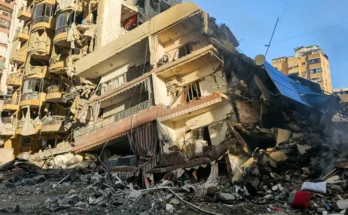
According to the United States Central Command (CENTCOM), American forces have attacked more than 3,000 targets inside Iran during the first seven days of a massive military campaign known as Operation Epic Fury.
The air campaign has focused on destroying missile systems, military bases, ships, and launch facilities used by the Iranian armed forces.
CENTCOM also reported that 43 Iranian ships have been damaged or destroyed since the attacks began.
US officials say the goal of the operation is to weaken Iran’s ability to threaten American allies and military bases across the Middle East.
At the same time, reports suggest that Trump is seriously considering sending ground troops into Iran as the conflict continues to escalate.
Meanwhile, several American B-2 stealth bombers are expected to arrive at RAF Fairford in the United Kingdom. These aircraft are the same bombers that were previously used to destroy Iranian nuclear facilities during Operation Midnight Hammer earlier this year.
The war has also begun affecting countries across the Gulf region.
In a dramatic incident, a suspected Iranian suicide drone crashed near Dubai International Airport, one of the busiest airports in the world.
Video footage showed the drone flying across clear blue skies before suddenly plunging downward. Seconds later, a powerful explosion shook the airport area.
A huge cloud of smoke rose near the airport terminals as passengers ran for safety.
Authorities quickly evacuated parts of the airport and temporarily suspended flights “until further notice,” creating panic among travelers.
The explosion appeared to occur near Concourse A, close to the large Terminal 3 complex used by many international airlines.
A fire was later reported near the terminal, while smoke could be seen rising above the airport.
However, the Dubai Media Office later tried to calm fears by saying the situation was not as serious as initially reported.
Officials described the incident as “minor” and said falling debris had caused no injuries.
Despite this statement, the attack caused major disruption and fear across the region.
Airline company Emirates later confirmed that some flights were beginning to resume, advising passengers with confirmed bookings to proceed to the airport.
The drone strike was part of a broader wave of Iranian attacks across the Gulf.
Missiles and drones were reportedly launched toward Bahrain, Saudi Arabia, and the United Arab Emirates as the conflict entered its second week.
Saudi Arabia announced that its air defenses had intercepted four drones targeting the huge Shaybah oil field.
At the same time, Israel carried out another large airstrike campaign against Iranian targets.
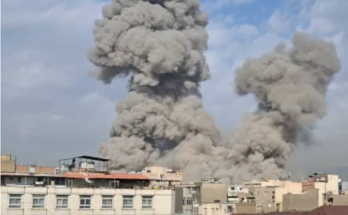
Israeli warplanes launched more than 80 fighter jets that dropped hundreds of bombs on sites in Tehran and central Iran.
Large explosions were reported near Mehrabad International Airport in Tehran, sending flames and thick smoke high into the sky.
Another important focus of the attacks has been Iran’s underground “missile cities.”
These secret military complexes were built deep underground to protect Iran’s missiles and drones from enemy attacks.
Some of these bunkers are located up to 1,600 feet below the surface and contain powerful weapons such as Shahab-3 missiles, which can travel up to 2,000 kilometers.
Iran previously showed videos of these underground facilities as part of military propaganda meant to demonstrate its strength.
But now these same bunkers have become prime targets for American and Israeli airstrikes.
Jason Brodsky, policy director at United Against Nuclear Iran, explained that destroying these sites could severely weaken Iran’s military power.
“The underground bunkers and missile cities are very susceptible to US and Israeli airstrikes as they can leave the Iranian regime without access to these munitions,” he said.
“This results in the degradation of the Islamic Republic’s ability to project power beyond its borders, neutralising the threat to the US and its allies and partners.”
Brodsky added that although these strikes alone may not cause a change of government in Iran, they could weaken the country significantly.
“While this can’t cause regime change by itself, it can lay the groundwork for a weakened Islamic Republic, preoccupied with its own domestic problems as opposed to concentrating on aggression abroad.”
One of the key targets in the bombing campaign is Khorramabad, the largest Iranian missile storage site located in Lorestan province.
Satellite images released in recent days show heavy damage to buildings and possible collapse of tunnel entrances used to store missiles.
Similar destruction has been reported at missile bases in Kermanshah and Tabriz.
Admiral Brad Cooper, the top American commander in the Middle East, said the military campaign is focused on destroying the last remaining Iranian missile launchers.
“We’re hunting Iran’s last remaining ballistic missile launchers to eliminate what I would characterise as their lingering ballistic missile capability,” Cooper said.
He added that Iran’s ability to strike American forces and allies is rapidly declining.
“We’re seeing Iran’s ability to hit us and our partners is declining.”
Military officials also say Iran’s missile launchers have dropped by about 86 percent since the start of the conflict.
Despite the apology from Iran’s president and signs that its military capabilities are weakening, the war continues with no clear end in sight.
With thousands of targets already destroyed and tensions rising across the Middle East, the world is watching closely to see what will happen next.
Stay Connected With Volta Fame!
Love keeping up with the latest news, updates, and fan conversations? Don’t miss out — join our growing community and be part of the action!