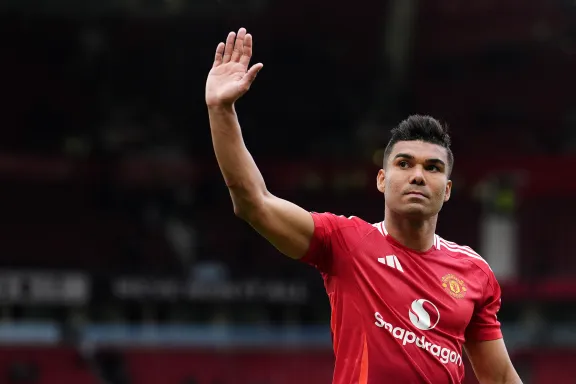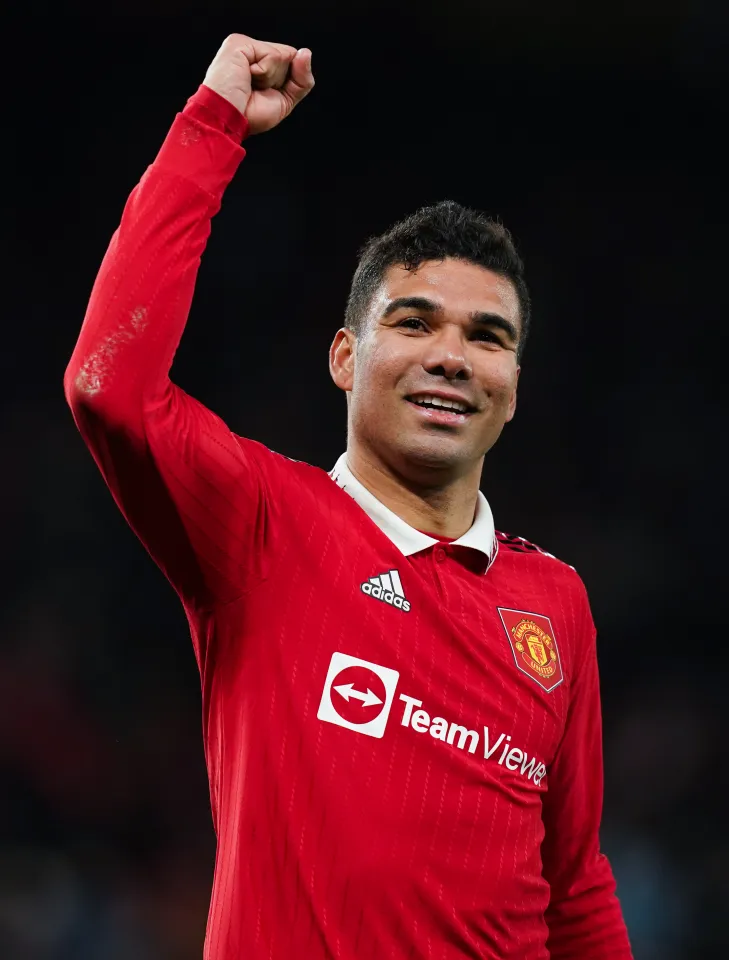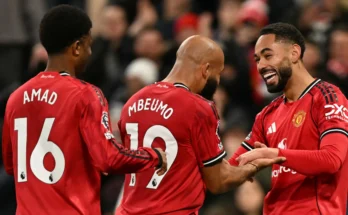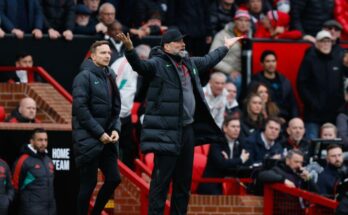
Manchester United are preparing for one of their biggest midfield changes in years. Casemiro, one of the highest-paid players in the club’s history, is set to leave Old Trafford at the end of the season. His huge £350,000-a-week wages will come off the books, and United already have a clear plan for what comes next.
Casemiro was one of the first major signings of the Erik ten Hag era. When he arrived from Real Madrid, he brought experience, trophies, and authority. He was a five-time Champions League winner and was seen as the missing piece in United’s midfield. For a while, that belief looked fully justified.
However, Manchester United have now decided not to renew his contract. Club chiefs believe the time is right to move on. Casemiro will be 34 next month, and the club no longer sees value in keeping such a high earner for another year.
United’s focus has now shifted to the future. Their main target for the summer transfer window is a new No.6, a defensive midfielder who can protect the back line and control games. According to sources, United have drawn up a four-man shortlist.
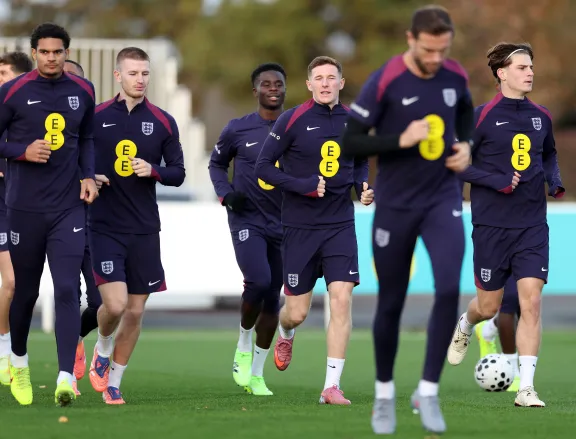
Three of those names are young English midfielders. Elliot Anderson of Nottingham Forest, Adam Wharton of Crystal Palace, and Alex Scott of Bournemouth have all impressed United scouts this season. The club believes they represent energy, discipline, and long-term value.
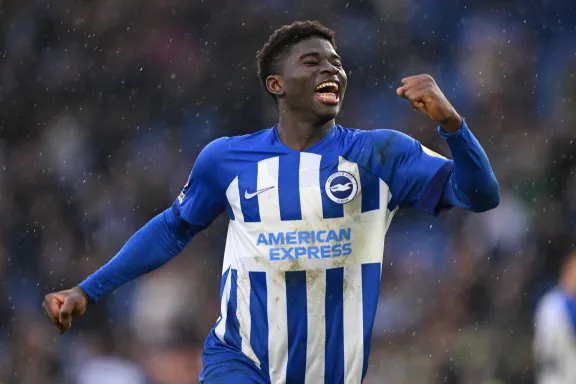
United are also monitoring Brighton midfielder Carlos Baleba. The 22-year-old Cameroon international was already a target last summer. A move in the winter transfer window was considered, but it is now unlikely because of uncertainty around the managerial position at Old Trafford.
Casemiro’s departure was officially announced by the club on Tuesday. The Brazilian responded with emotional messages to the fans, both on Manchester United’s official website and on Instagram.
He said: “I will carry Manchester United with me throughout my entire life. From the first day that I walked out at this beautiful stadium, I felt the passion of Old Trafford and the love that I now share with our supporters for this special club.”
Casemiro made it clear that he is not mentally checked out. He added: “It is not time to say goodbye; there are many more memories to create during the next four months. We still have a lot to fight for together; my complete focus will, as always, remain on giving my everything to help our club to succeed.”
On Instagram, his message was even more personal. He wrote: “Knowing when stages come to an end. Knowing when to say goodbye when you feel that you will be remembered and respected forever. Four months to give my all for this badge and for our goal. Eternal respect and affection for Manchester United and its wonderful fans. Forever Red Devil.”
In truth, Casemiro’s exit is not a shock. Many inside football expected it. He is one of the club’s highest earners, and his best season was clearly his first. Keeping him for a fifth year would have made little sense.
Last season, his form was mixed. He was often better in European games than in the Premier League. Still, he had big moments. One of the most memorable was his heroic role in the Europa League quarter-final against Lyon, when United came back from 4-2 down to win 5-4.
This season, Casemiro has not been as poor as some feared. With only one game per week and Manuel Ugarte struggling to convince, Casemiro has filled in and done a decent job. Surprisingly, he was even named man of the match in the recent Manchester derby, despite several teammates playing better.
From Casemiro’s point of view, these performances helped him show that he still has something to offer. But the bigger picture tells a different story. United paid £60 million up front for him, possibly rising to £70 million. On top of that, the club spent around £73 million on wages across four years.
That deal came after a long and failed attempt to sign Frenkie de Jong from Barcelona. Casemiro was the alternative, and while he delivered early success, the long-term planning was questionable.
In his first season, Casemiro was outstanding. He was a strong contender for Player of the Year and scored the winning goal in the Carabao Cup final. Erik ten Hag famously called him “the cement between the stones” because he held the midfield together.
Things began to fall apart in his second season. He was paired with Mason Mount in midfield, an experiment that lasted just two games before injury struck. Casemiro never fully regained rhythm after that.
During an injury crisis, he selflessly played many matches at centre-back. That decision hurt his reputation. One of the worst moments came at Crystal Palace, where United lost 4-0 and Casemiro was easily turned by Michael Olise for the first goal.
That run of form eventually cost him a place in the FA Cup final team. Ten Hag chose Sofyan Amrabat instead, and Casemiro was not even on the bench due to injury.
It looked like the end, but he stayed for two more seasons because no club was willing to pay his wages. United tried to find a buyer, including in the winter transfer window last year, but the chances were described as “near zero.”
After a defeat to Newcastle in December 2024, Casemiro did not play for a month. United were stuck with a massive salary and no exit plan. It was not a healthy situation for the club.
To his credit, Casemiro accepted his limitations. He understood that there were things he could no longer do at Premier League speed. Recently, Michael Carrick recalled him and benched Ugarte for the derby-day 2-0 win, where Casemiro was steady and disciplined.
In the end, Casemiro should not be remembered only as a costly mistake. He played a key role in one of the few successful periods of the post-Ferguson era and helped deliver two cup trophies.
Still, the way the deal was structured reflects poorly on the club’s hierarchy. If anyone had approved a contract extension for Casemiro, serious questions would have been asked.
Now, Manchester United look ahead. With Casemiro’s wages gone, a new chapter begins. Younger legs, smarter planning, and a midfield built for the future are finally on the agenda.