The war between Iran, the United States, and Israel is growing more dangerous by the hour. New attacks, political changes, and rising tensions across the Middle East are pushing the region into one of the most serious crises in decades.
Iran’s military and political leaders have now pledged loyalty to Mojtaba Khamenei, who has been named the new Supreme Leader after the death of his father, Ayatollah Ali Khamenei. The leadership transition happened while bombs and missiles continue to fall across the region.
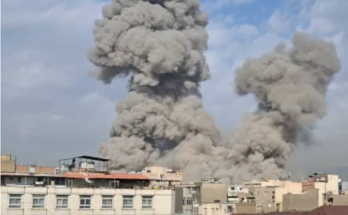
Explosions were reported in the Iranian cities of Tehran and Qom, just hours after Israeli strikes hit oil facilities. Those attacks sent thick toxic smoke into the sky over the Iranian capital, increasing fears that the conflict could damage critical energy infrastructure.
Iran’s government says the war is not its choice. During a press conference, Iranian Foreign Ministry spokesman Esmaeil Baghaei said the country is simply defending itself.
“This is not a war of choice. It is a war of necessity that was imposed on us,” Baghaei said.
He also accused the United States and Israel of violating international law and trying to weaken Iran.
“They have violated all international norms and practices,” Baghaei said.
Baghaei went even further, claiming the real goal of the attacks is to control Iran’s resources.
“Their design is clear, their enterprise is quite obvious – they aim at partitioning our country to take illegal possession of our oil riches,” he said. “Their objective is to violate our sovereignty, defeat our people and undermine our humanity.”
Meanwhile, a newly released video has caused outrage around the world. The footage suggests a US Tomahawk missile may have hit an elementary girls’ school in Minab, Iran. According to reports, 175 people were killed, most of them children.
The shocking video has raised serious questions about the conduct of the war and the safety of civilians.
Military experts say Iran is responding with a strategy designed to create chaos across the region.
Rob Geist Pinfold, a lecturer in international security at King’s College London, explained that Iran is firing missiles and drones to destabilize its enemies.
“There’s been all sorts of speculation it might run out of ballistic missiles or the ballistic missile launchers can get taken out by the US and Israel,” Pinfold said.
However, he noted that Iran still has cheaper and easier weapons available.
“In such a scenario Iran could still keep firing the low-cost and easy-to-manufacture Shahed drones which don’t require a specialist launch platform.”
According to Pinfold, the strategy is intentional and dangerous.
“This is function of Iran’s strategy; it’s not a mistake or a blip,” he said.
He added that Iran may be trying to force the United States to push for peace talks.
“What they’re doing now is trying to unleash as much chaos as possible to destabilise the region and global markets, hurt the economy, hurt the GCC states in order that the US will at some point decide that this conflict is no longer worth its while anymore and will push for a ceasefire.”
Pinfold believes the Iranian leadership sees the war as an existential battle.
“For them, it’s really a do-or-die moment.”
The conflict has already spread far beyond Iran and Israel. Missiles and drones have been launched toward several countries in the Middle East.
Qatar said its air defenses intercepted 17 ballistic missiles and six drones fired from Iran, preventing casualties. The United Arab Emirates also reported intercepting several missiles and drones launched in its direction.
NATO confirmed it shot down a missile that was heading toward Turkiye, marking the second such interception within a week.
In Bahrain, a drone attack injured 32 people, including children, according to the US military.
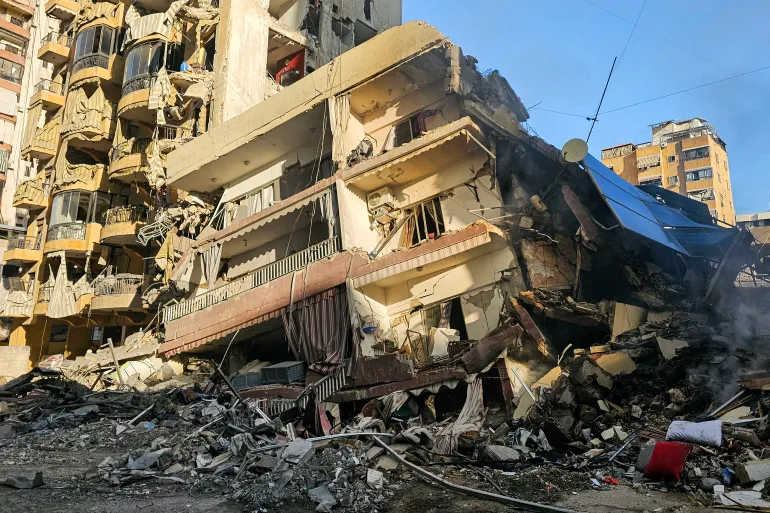
The violence is also spreading into Lebanon. Israeli air strikes have hit southern areas of the country, killing two paramedics and injuring several others.
Lebanese President Joseph Aoun has called for a “complete ceasefire” with Israel and urged international support for a plan that would allow the Lebanese army to take control of areas currently influenced by Hezbollah.
At the same time, thousands of civilians are fleeing violence in the region. Families from Lebanon have been crossing into Syria on foot as attacks intensify.
The war is also shaking the global economy. Oil prices surged past $119 per barrel, creating fears of inflation around the world.
The International Energy Agency has urged countries to release emergency oil reserves to stabilize markets.
Japan’s Finance Minister Satsuki Katayama said the agency called for a coordinated action by countries.
“IEA called for each country to do coordinated release of oil reserves,” she explained.
European leaders are also worried about the economic impact.
German Chancellor Friedrich Merz said rising energy prices could damage Germany’s economy, while British Prime Minister Keir Starmer warned that the longer the war continues, the more it could affect businesses and families.
Even financial markets are reacting. Stock markets in Europe fell sharply as investors fear inflation and economic uncertainty.
Despite these dangers, some economists believe the global economy will not collapse.
Nobel Prize-winning economist Philippe Aghion said the war could slow economic growth but is unlikely to cause a crisis like the 2008 financial meltdown.
“I see a possible slowdown,” he said, “but I don’t see a collapse.”
The war is also reshaping global alliances. Analysts say Russia and China are watching the conflict carefully.
Adlan Margoev, a researcher at Moscow’s MGIMO University, said both countries want the war to end but may quietly support Iran.
“The longer and the more effective Tehran is, the more behind-the-closed-doors support I expect from the two capitals,” he said.
Inside Iran, the leadership transition to Mojtaba Khamenei is being presented as a sign of unity.
President Masoud Pezeshkian said the appointment reflects the will of the people.
He wrote that the selection of the new supreme leader is “a manifestation of the people’s will” and expressed hope that the country’s problems could be solved through “wise leadership”.
Supporters of the new leader gathered in Tehran, holding pictures of his father and pledging loyalty to the Islamic Republic.
However, the situation remains extremely tense. New Israeli strikes have already begun targeting infrastructure in Tehran, Isfahan, and southern Iran.
With missiles flying across multiple countries, rising oil prices, and millions of civilians caught in the middle, many fear that the war could still escalate into an even larger global crisis.
For now, the world is watching closely as the conflict continues to unfold.
Stay Connected With Volta Fame!
Love keeping up with the latest news, updates, and fan conversations? Don’t miss out — join our growing community and be part of the action!