
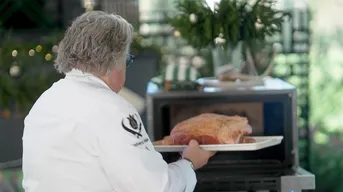
When it comes to Christmas dinner, many Americans choose one thing above all: roast beef. This year, celebrity chef David Burke, known for his hit show American Kitchen on Fox Nation, has shared a festive and delicious recipe for roasted spice-crusted prime rib that you can make right at home.
“Americans for Christmas — we choose roast beef,” Burke says as he introduces the star of the holiday table.
Whether you select prime beef or choice beef, Burke emphasizes that both can shine if cooked with care. “They’re both great,” he notes, suggesting that the cut be separated from the ribs to make cooking easier.
Burke promises that his recipe is simple enough for home cooks yet delivers restaurant-quality results. “We’re going to show you how to make it easily like a chef at a restaurant,” he explains. “But we’re going to do it with a smaller piece.”
The magic starts with Burke’s seasoning blend: garlic powder, onion powder, coarse salt, black pepper, and just a touch of cayenne for heat. He stresses caution with the cayenne, saying, “Just be careful, because cayenne gets very hot.”
The spice rub is generous, covering the outside of the roast. “We’re going to put a lot of spice on here, understanding a lot of it will fall off. And it’s only on the outside. You have a thick cut of meat, so you’re not really seasoning the inside.”
Instead of layering vegetables under the roast at the start, Burke uses a clever trick. He adds mirepoix — onions, carrots, and celery — midway through cooking to keep the vegetables intact and presentable for the holiday table. “I don’t want it to cook to mush,” he says.
Once the roast is perfectly cooked, it’s time for the satisfying part: carving and plating. “Now that’s a roast,” Burke exclaims as the prime rib comes out of the oven nearly two hours later, ready to impress family and friends.
For the prime rib, Burke recommends roasting at 325–350 degrees Fahrenheit with the bones placed at the bottom of the pan to elevate the meat. After about 2 hours and 15 minutes, the roast should reach an internal temperature of 120 degrees.
While the meat rests, you can prepare the Mushroom–Madeira Stew, a rich and flavorful side. Start by melting butter in a large saucepan and sautéing onions, carrots, and celery for six minutes until soft.
Next, add shiitake mushrooms and cook for another five minutes before deglazing the pan with Madeira wine. Cook until only about a tablespoon of liquid remains, then stir in flour to thicken the stew.
Add boiling chicken stock and simmer for about 10 minutes. Season with salt and pepper to taste. This sauce blends perfectly with the roasted prime rib, enhancing its deep, savory flavors.
For an elegant finishing touch, Burke recommends a Horseradish–Mustard Mousse. Begin by whipping crème fraîche in a chilled bowl until soft peaks form. Then fold in prepared horseradish, Dijon mustard, salt, and black pepper.
Whisk until the mousse becomes slightly firm. Cover and refrigerate until serving. This mousse provides a creamy, tangy counterpoint to the rich roast and mushroom stew.
Burke’s approach combines careful seasoning, precise cooking, and timing of accompaniments to achieve a balance that makes a holiday meal feel special.
He emphasizes that a thick crust of spices is enough to flavor the exterior, while the meat remains tender and juicy inside. This technique mimics the results you’d expect from a high-end restaurant.
The secret is not only in the spices but also in cooking technique. Resting the meat before carving allows juices to redistribute, making each slice succulent.
Burke’s method proves that you don’t need a professional kitchen to create a stunning centerpiece. With attention to detail, even home cooks can serve a prime rib that looks and tastes gourmet.
He encourages experimenting with the heat level, suggesting that cayenne pepper can be adjusted to taste. This personal touch ensures the dish fits your family’s flavor preferences.
From preparing the seasoning to roasting, adding vegetables, and finishing with a mushroom stew and mousse, every element of this meal is designed to impress without overwhelming the cook.
Burke concludes, “It’s all about the experience — making it festive, making it delicious, and making it a meal people will remember.”
With this recipe, anyone can create a holiday feast that rivals their favorite restaurant, bringing both warmth and flavor to the family table this Christmas.