Arsenal’s dramatic 3-2 defeat to Manchester United has not ended with the final whistle. Instead, it has opened a fresh debate about fairness, refereeing, and whether football rules need to change.
The focus is not on Manchester United’s winning goal or Arsenal’s missed chances. It is about what happened at a corner kick late in the match, and whether Arsenal crossed a line that referees are failing to police.
Former Premier League referee Mark Clattenburg has now stepped forward, urging the Professional Game Match Officials Limited, known as PGMOL, and the Premier League to take immediate action.
Clattenburg believes that goalkeepers are being unfairly targeted and blocked during corner kicks, and that officials are allowing too much physical contact in the penalty area.
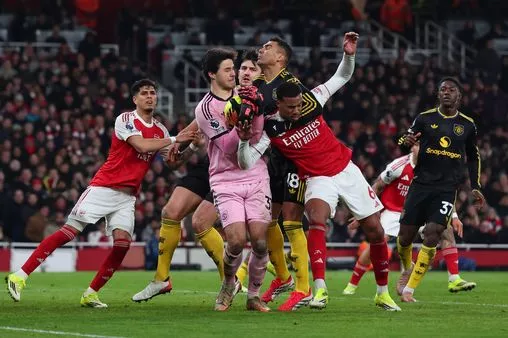
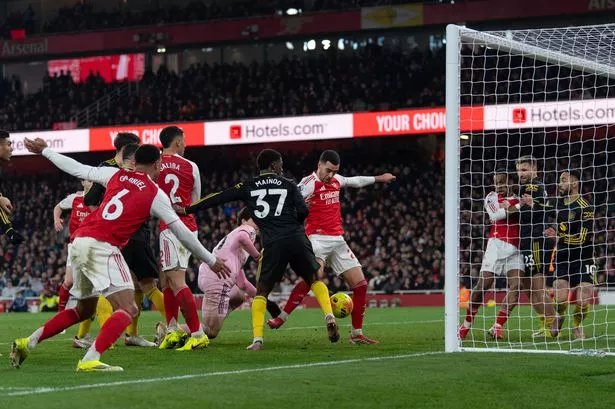
The moment that sparked the controversy came in the 84th minute. Arsenal won a corner, and chaos followed inside the Manchester United box.
United goalkeeper Senne Lammens was surrounded by Arsenal players. He struggled to move, could not jump freely, and was unable to reach the ball.
Seconds later, Mikel Merino reacted quickest and scored for Arsenal, once again showing how dangerous Mikel Arteta’s side have become from set-pieces.
Even though Arsenal went on to lose the match 3-2, the goal reignited a growing debate about tactics at corners and how far teams should be allowed to go.
Mark Clattenburg believes the answer is clear. He says referees must begin giving more free kicks to protect goalkeepers.
“It’s something the PGMOL and Premier League need to address, and any blocking on the goalkeeper must be punished by a free-kick,” Clattenburg told United In Focus.
He admitted that stricter enforcement would cause more fouls at first, but insisted it would quickly solve the problem.
“Yes, more fouls will be given at first, but when teams realise they will not be allowed to use this tactic, they will stop,” he explained.
Clattenburg also pointed to European football as proof that this approach works.
“We see this tactic used less in the Champions League as referees punish more!” he added, suggesting English football is falling behind.
According to Clattenburg, this issue has grown as clubs hire specialist set-piece coaches, all looking for small advantages that can decide matches.
But not everyone agrees that referees should step in.
Former Manchester United and Everton defender John O’Kane believes the responsibility lies with defending teams, not officials.
“It ain’t rocket science,” O’Kane said bluntly.
“Coaches have to start leaving two or three players on the halfway line,” he added, suggesting tactical adjustments are enough to stop Arsenal.
O’Kane went further, accusing Arsenal of exploiting a loophole.
“Stoke have found a loophole in s***housery of obstructing the goalkeeper,” he said, using a nickname aimed at Arsenal’s physical approach.
While the debate raged, Manchester United players appeared relaxed about the situation.
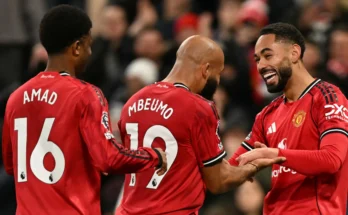
After the win, United winger Amad Diallo even joked about Arsenal’s reliance on set-pieces.
Responding to a supporter online, the Ivory Coast international wrote: “Your only hope is corner,” followed by a laughing emoji.
The comment quickly went viral and summed up how Arsenal are now viewed across the league.
Arteta’s team have scored 26 goals from dead-ball situations this season, making them the most dangerous set-piece side in the Premier League.
Despite the criticism and mockery, Mikel Arteta refused to blame referees or tactics for the defeat.
Instead, the Arsenal manager took full responsibility.
“I take full responsibility [today],” Arteta said. “They have to take full responsibility for what they’ve done for seven months, in the manner that they behaved, how much they want it.”
He acknowledged that setbacks are part of the journey.
“And now, in the process of winning, you have to lose or draw. It’s how you react to that,” he added.
Arteta quickly turned attention to the future, pointing to Arsenal’s upcoming Champions League match.
“Now we have another opportunity, the best place to talk is on the pitch, in three days’ time, when we play in the Champions League again.”
He also called for unity and positivity around the club.
“And the better the energy is around everybody – around the staff, myself, the players, and especially our supporters – much better. And much better we’ll play freely, we’ll flow, and we’ll continue to win a lot of matches, I’m sure.”
Whether PGMOL listens to Clattenburg or not, one thing is clear.
Arsenal’s set-pieces are now powerful enough to change games, anger rivals, and force football’s rule-makers into uncomfortable conversations.
Stay Connected With Volta Fame!
Love keeping up with the latest news, updates, and fan conversations? Don’t miss out — join our growing community and be part of the action!
WhatsApp Channel
X
Facebook Page