The timing could hardly be ignored. Just 48 hours after Steve Holland arrived at Manchester United as the new No.2, Gareth Southgate spoke publicly about power, control, and the modern role of a football manager. He did not mention Old Trafford. He did not mention United. Yet his words landed right in the middle of their latest storm.
Manchester United are once again searching for clarity. Ruben Amorim has been dismissed, Michael Carrick is holding things together as interim manager, and the club’s structure above the head coach is under intense focus. Into that space stepped Southgate, calm and deliberate, offering thoughts that felt unusually relevant.
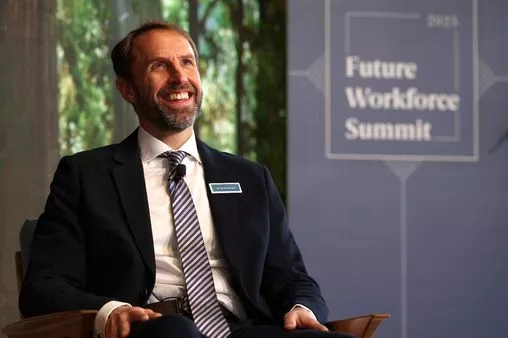
Southgate chose to address a subject many managers avoid. He spoke openly about how authority has slowly shifted away from the manager over many years. Not suddenly. Not aggressively. But steadily.
“The erosion of a manager’s authority has been a gradual process over many years,” he said, capturing a reality that now defines elite football.
He explained how this change accelerated with the rise of Football Directors, Technical Directors, and Sporting Directors. These figures now shape long-term football strategy, report directly to CEOs or owners, and sit structurally above the Head Coach.
For many managers, that structure feels threatening. For Southgate, it does not.
“Personally, I have no issue with this evolution,” he said. He spoke about strategy, culture, planning, and continuity as pillars of success, arguing that a football club is no different from any other high-performing organisation.
Those words could have been written for Manchester United. Under Sir Jim Ratcliffe, the club has embraced a top-down model. Decision-making power no longer rests solely with the manager. Figures like Jason Wilcox and Omar Berrada now shape the club’s direction.
Both played key roles in the process that led to Ruben Amorim’s sacking. The message from the hierarchy was clear. The manager is part of the system, not above it.
That is why Southgate’s comments felt so pointed, even without intent. He is one of the few elite coaches who openly accepts this modern balance of power. In the current United structure, that matters.
It also raises a quiet question. Was this Southgate subtly reminding people that he fits the world United are building?
The connection is not imaginary. Southgate is a known friend of Ratcliffe. Their paths have crossed often enough for trust to exist. And United have already considered Southgate before.
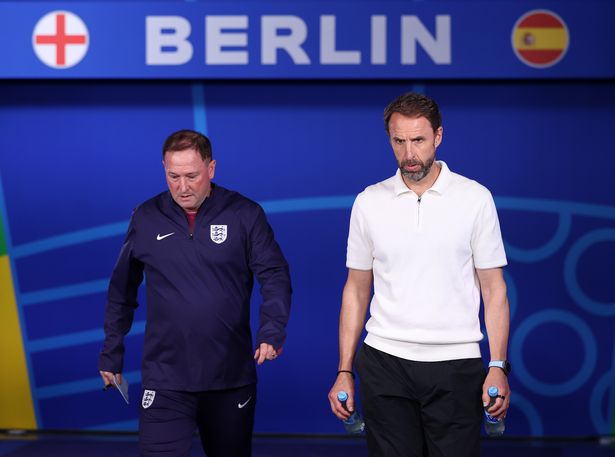
When Erik ten Hag’s position became untenable, Ratcliffe did think about Southgate. At that moment, the timing was impossible. Southgate was fully focused on Euro 2024 and committed to England.
After the tournament, he stepped away from management entirely. The job had brought success, but it had also drained him. Walking away felt like the right decision.
That context matters. There is nothing to suggest Steve Holland’s appointment as assistant to Michael Carrick is part of a long-term plan to bring Southgate to Old Trafford.
There is nothing to suggest Holland has been sent in to quietly assess the club before reporting back. And there is nothing to suggest United are actively lining Southgate up as their next manager.
There is also nothing to suggest Southgate himself is pushing for a return to club football. Everything points to caution rather than ambition.
Still, the Manchester United job has a gravity few can ignore. It remains one of the most iconic positions in world football. Even managers who claim they are done often find themselves drawn back into its orbit.
That is why theories continue to swirl. Is Holland laying foundations? Is he simply rebuilding his own reputation after England? Or is United just another stop on the way to his next role elsewhere?
Another uncomfortable question keeps returning. If United truly wanted Southgate right now, why did they not appoint him? He is available. He would cost nothing in compensation.
That reality suggests the answer sits somewhere in the middle. United may want a different profile. Southgate may want distance. Or both sides may simply be leaving the door open.
What cannot be denied is that Southgate has kept himself relevant. Without campaigning. Without denying interest. Without forcing his name into headlines.
By speaking about authority and structure, he placed himself directly into the modern football debate. And he did so at a moment when Manchester United are redefining exactly what they want their next manager to be.
He did not chase the job. He did not reject it either. Instead, he reminded everyone that he understands the game as it now exists, not as it used to be.
At a club where power no longer belongs to one man alone, that understanding may be more valuable than tactics or trophies.
And that is why, even without trying, Gareth Southgate has once again found himself part of the Manchester United conversation.
Stay Connected With VoltaFame!
Love keeping up with the latest news, updates, and fan conversations? Don’t miss out — join our growing community and be part of the action!