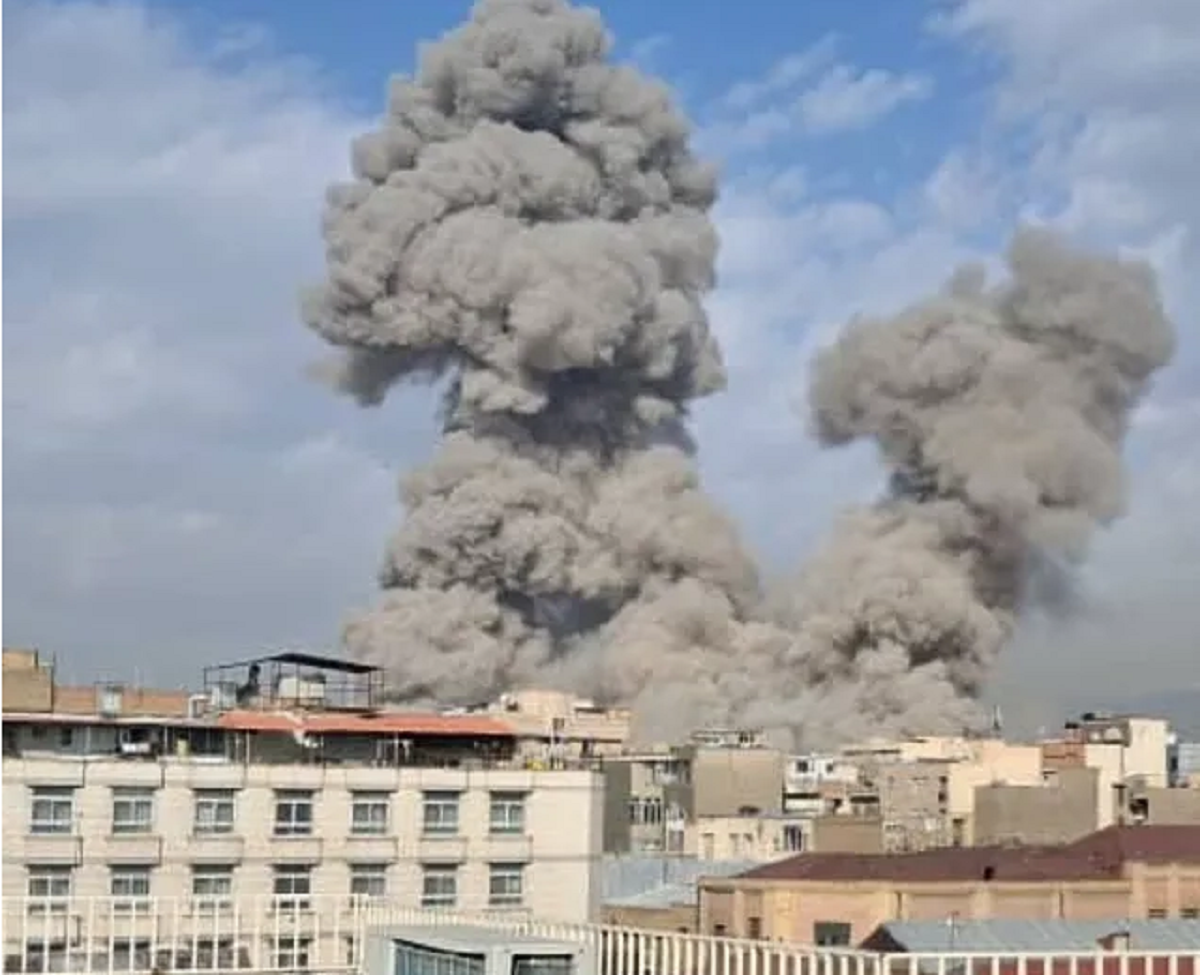
The war involving Iran, Israel, and the United States entered its sixth day with new explosions, missile strikes, and rising fears that the conflict could spread across the entire Middle East. Military attacks have intensified in several countries while ships, airports, and civilians across the region are caught in the growing crisis.
On Thursday, Israel launched a fresh wave of powerful airstrikes targeting locations inside Iran. According to reports, the strikes hit several strategic areas including the Iranian capital Tehran, a military facility in the city of Qom, and air defense systems in Isfahan. Explosions were also reported in the nearby city of Karaj as Israel continued what it described as a large-scale campaign against Iranian military infrastructure.
At the same time, Iran responded by firing more missiles toward Israel. Air raid sirens sounded across major cities including Tel Aviv and Jerusalem, sending civilians rushing to shelters. Israeli emergency services later said there were no immediate reports of casualties from the latest missile barrage.
The conflict has also begun to affect global trade routes and international shipping. Iran claims it has struck an American oil tanker in the Persian Gulf with a missile. Iranian state media reported that the tanker “was hit by a missile in the north of the Persian Gulf” and that it “is currently on fire.” The Islamic Revolutionary Guard Corps also said it now has “full control” of the Strait of Hormuz, one of the most important oil transit routes in the world.
The Strait of Hormuz connects the Persian Gulf to the Indian Ocean and carries nearly 20 percent of the world’s oil supply. Iran has warned that it could attack foreign vessels passing through the waterway. Because of this threat, hundreds of ships have already been stranded, causing serious concern in global energy markets.
Despite the danger, one tanker linked to China reportedly passed through the strait. According to shipping data, the vessel changed its signal to “CHINA OWNED” while entering the strategic waterway, possibly as a precaution while tensions remain high.
Another major incident happened in the Indian Ocean near Sri Lanka, where a US submarine torpedoed an Iranian warship. The ship, named Iris Dena, was destroyed in the attack. US Defense Secretary Pete Hegseth confirmed the strike, saying it was part of a wider military campaign against Iranian naval forces.
The sinking of the warship resulted in heavy casualties. Sri Lankan authorities said at least 87 Iranian sailors were killed and 32 were rescued and taken to hospitals. Around 60 sailors are still reported missing. Iran strongly condemned the attack, with Foreign Minister Abbas Araghchi calling it an “atrocity at sea.”
He wrote on social media: “Frigate Dena, a guest of India’s Navy carrying almost 130 sailors, was struck in international waters without warning.” He also warned Washington, saying, “Mark my words: The U.S. will come to bitterly regret precedent it has set.”
Tensions have also spread to the Caucasus region. Authorities in Azerbaijan reported that three Iranian drones targeted the passenger terminal of the international airport in Nakhchivan. Videos circulating online showed one drone flying toward the airport before a large explosion damaged the main terminal building. Emergency teams were seen rushing to the scene.
Officials say it is still unclear whether anyone was injured in the attack. The airport lies only about ten kilometers from the Iranian border, making it vulnerable during the escalating conflict.
Meanwhile, multiple explosions were reported over the skies of Doha in Qatar. Journalists on the ground said they heard several blasts as air defense systems intercepted incoming projectiles. Videos showed smoke rising above the city, though there were no immediate reports of casualties or major damage.
The war is also creating chaos for civilians and travelers across the region. Thousands of cruise passengers are currently stranded in Gulf ports including Dubai, Abu Dhabi, and Doha after ships were ordered to remain in safe waters.
Passengers aboard the cruise ship MSC Euribia described being awakened by emergency alerts. According to witnesses, the message told them to “seek immediate shelter in the closest secure building.” Some passengers said they could “constantly hear explosions” nearby while missile interceptions took place.
Air travel has also been severely disrupted. Israel’s main international airport, Ben Gurion Airport, has reopened after being closed for five days. The airport shut down when the joint US-Israeli strikes on Iran began.
The first repatriation flights have already arrived in Tel Aviv, bringing home Israelis who were stranded abroad during the conflict. Transport Minister Miri Regev said authorities were working quickly to help citizens return home safely. She stated, “We are doing everything possible to bring every Israeli home safely.”
Elsewhere, evacuation efforts have faced delays. A flight organized by the United Kingdom to evacuate British citizens from Oman failed to depart on schedule due to technical issues. Government officials say the flight is expected to leave later, and several additional evacuation flights are being planned.
British Home Office minister Alex Norris said government teams were assisting travelers affected by the delays. He explained, “We know people are feeling stressed, our people are on the ground… helping them support them through that.”
Military tensions are also rising in Europe and nearby regions. The UK Defense Secretary John Healey arrived in Cyprus after drone attacks targeted an area near a British military base earlier in the week. Britain has also announced plans to send the warship HMS Dragon to the region as security concerns grow.
Meanwhile, Saudi Arabia reported that its air defense systems intercepted three cruise missiles approaching the kingdom. Officials said the missiles were destroyed outside the city of Al-Kharj, though they did not reveal where the projectiles were launched from.
The war has also sparked fears of a new ground conflict inside Iran. Reports claim that Kurdish fighters based in Iraq may be preparing to enter Iran to challenge the government in Tehran.
Khalil Nadiri, an official with the Kurdistan Freedom Party, said fighters were gathering near the border. According to him, Kurdish groups with thousands of trained soldiers could soon confront Iranian Revolutionary Guard forces.
Iran quickly warned these groups not to take advantage of the situation. Ali Larijani, secretary of Iran’s Supreme National Security Council, delivered a strong message, saying: “Separatist groups should not think that a breeze has blown and try to take action. We will not tolerate them in any way.”
The United States has continued to support Israel’s military campaign. US Defense Secretary Pete Hegseth reportedly told Israeli officials to continue their attacks against Iran. According to Israel’s defense ministry, Hegseth said: “Keep going until the end – we’re with you.”
In Washington, political leaders have also debated the war. The US Senate recently voted against a measure that would have limited President Donald Trump’s authority to carry out further military operations in Iran. The vote effectively allows the current intervention to continue without restrictions.
American military planners are also preparing for a longer conflict. According to reports, US Central Command has requested additional intelligence officers to support operations. Officials say the war could potentially last at least 100 days if fighting continues at the current pace.
The situation remains extremely volatile as attacks continue across several countries. With missiles flying, warships sinking, drones striking airports, and global shipping routes under threat, the conflict between Iran, Israel, and their allies is rapidly becoming one of the most dangerous international crises in recent years.
As the sixth day of the war unfolds, governments around the world are watching closely, fearing that the violence could spread even further and draw more nations into the conflict.