
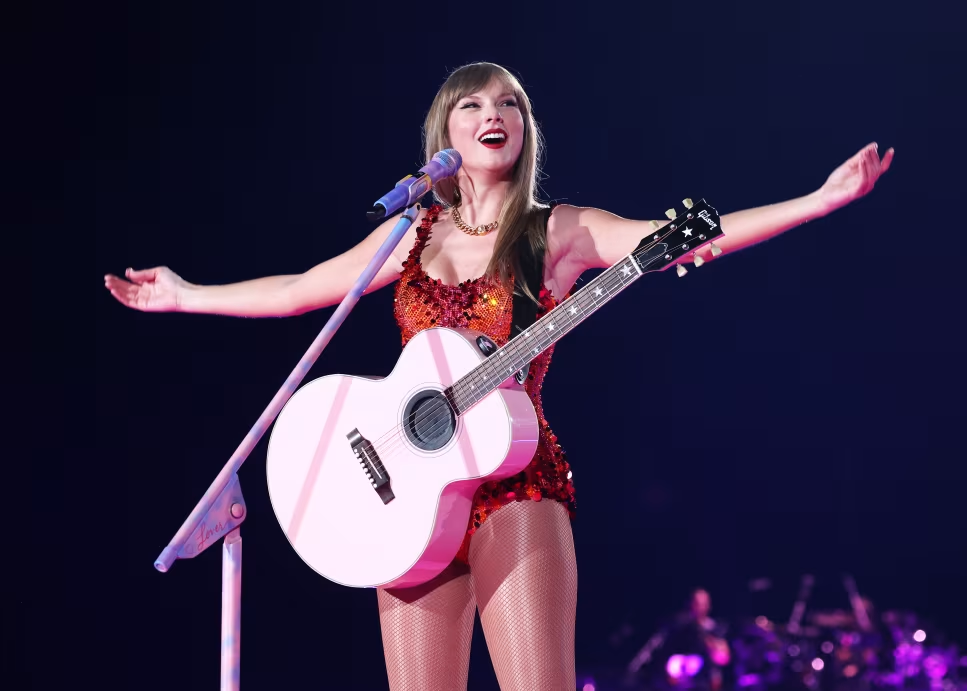
I never thought I would write this, but here it goes: the new Taylor Swift docuseries on Disney+, The End of an Era, turned me into a Swiftie.
For years, I have been an entertainment journalist, tasked with covering celebrities without falling under their spell. Someone once told me, “You are not to be a fan, but you have to represent the fans.” That advice stuck with me—and it worked…until now.
When it comes to Taylor Swift, I successfully stayed neutral. I admired her songwriting and her devotion to her fan base, known as the Swifties, but I never felt the full pull of her fandom.
Then Disney+ released the first two episodes of her docuseries, and everything changed. It sounds dramatic, but documenting the most successful music tour of all time is nothing short of epic.
I have never hated Taylor Swift. In fact, I have always respected her artistry and her care for her fans. But the complete loyalty of her fan base sometimes felt excessive to me—the friendship bracelets, the unwavering defense of every move she makes, the way some fans see her as untouchable.
Watching the first episodes of The End of an Era gave me not only insight into why Swift’s fandom is so intense, but also how she earned it. The series takes viewers behind the scenes of her Eras Tour, which spanned the globe, generated billions of dollars, and cemented her as one of the world’s top artists.
What struck me immediately was how intentional she is as a celebrity. Swift knows her audience deeply and seems to understand not just what they want from her, but what they need.
One of the most moving moments in the series shows her anxiety over a thwarted terrorist attack at her Vienna concert. Later, she meets survivors and families affected by a knife attack in the UK during one of her dance parties. Her tears reminded me that she is human, not just a star on a stage.
It’s easy to forget this in American culture, where celebrities are often treated like royalty. Behind the glitter and glamour, Swift shows vulnerability, and that makes her more relatable.
Her relatability is not new. Swift has hosted secret listening parties for fans, commented personally on early Instagram posts, and used emojis to communicate directly with them. She knows the value of connection.
The docuseries introduces viewers to her backup dancers, including Kameron Saunders, a plus-sized Black man raised by a single mother who sacrificed everything for him and his brother. His story is touching, and his joy and tears while interacting with Swift show her commitment to inclusivity and care.
Saunders also reads a handwritten note that Swift gives to all her dancers alongside their bonuses. The reactions are emotional, with some breaking down in tears. While the exact amounts are not revealed, it’s clear these gifts are life-changing.
Swift’s generosity extends far beyond her dancers. She once gave $100,000 bonuses to truck drivers on tour, which made headlines. The docuseries reveals that her largesse reaches many others, reinforcing why fans remain devoted to her.
Watching these acts of kindness unfold on screen, I began to understand why loyalty runs so deep. It’s not just about music; it’s about humanity, connection, and care.
Even mundane details feel personal in the series. When I watched early in the morning while everyone else in my house slept, it felt intimate, as if Swift were speaking directly to me.
The series also highlights her fearless career. Swift balances superstardom with vulnerability, showing moments of anxiety, compassion, and celebration. This duality is rare in the world of celebrity.
For a journalist trained to remain objective, these moments are disarming. They challenge preconceptions and force admiration, even from skeptics.
The docuseries is not just about music or touring; it’s about the people who make it all possible. From dancers to crew, Swift honors everyone who contributes, and the camera captures their reactions authentically.
Her relationship with fans is woven into every frame. She celebrates them, respects them, and elevates them alongside her success. The result is a fanbase that feels personally seen and fiercely loyal.
By the end of the episodes, I felt something unexpected: love for the artist I had only observed from afar. Taylor Swift is not just a performer; she is a storyteller, a leader, and a force of generosity.
It’s a reminder that great celebrities do more than entertain—they inspire. The End of an Era is not only a tour diary; it is a testament to Swift’s heart, her mind, and her vision.
So yes, I am now a Swiftie. It happened quietly, watching her care for others, seeing her tears, and understanding her genius. Look what you made me do, Taylor Swift.