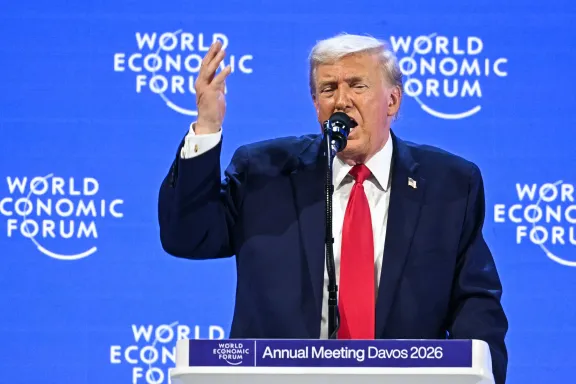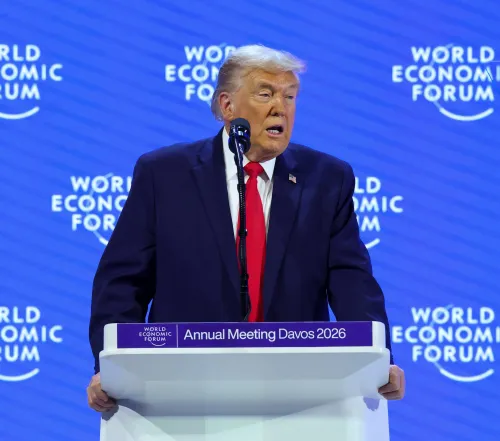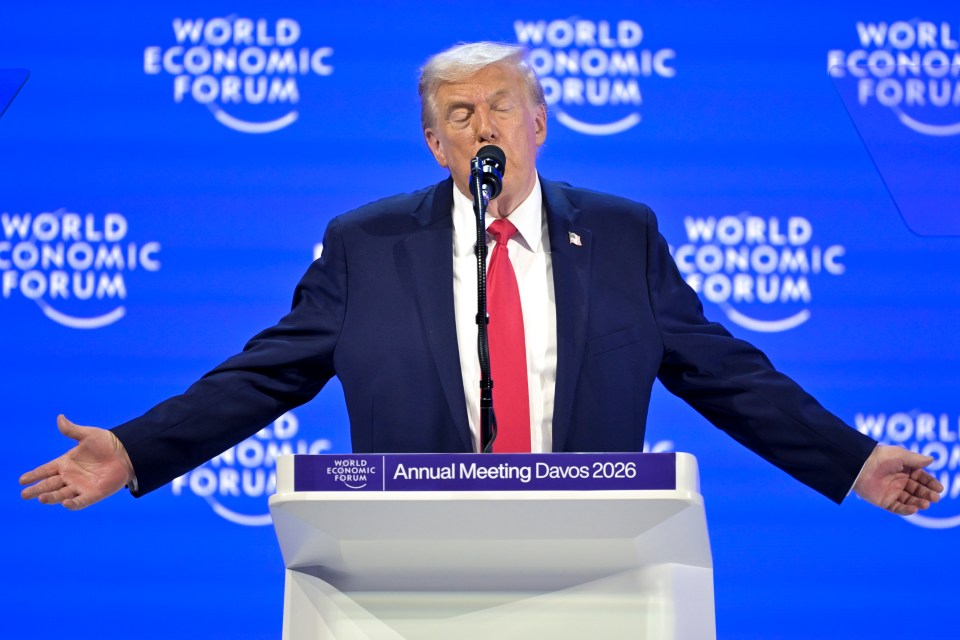
In a jaw-dropping speech at the World Economic Forum in Davos, US President Donald Trump sent shockwaves across Europe and the world with his renewed focus on Greenland. While Trump promised he would not invade the massive Arctic island, he left no doubt about his ambitions and warned Denmark and European allies that he would “remember” if they refused to hand over what he repeatedly called a “piece of ice.”
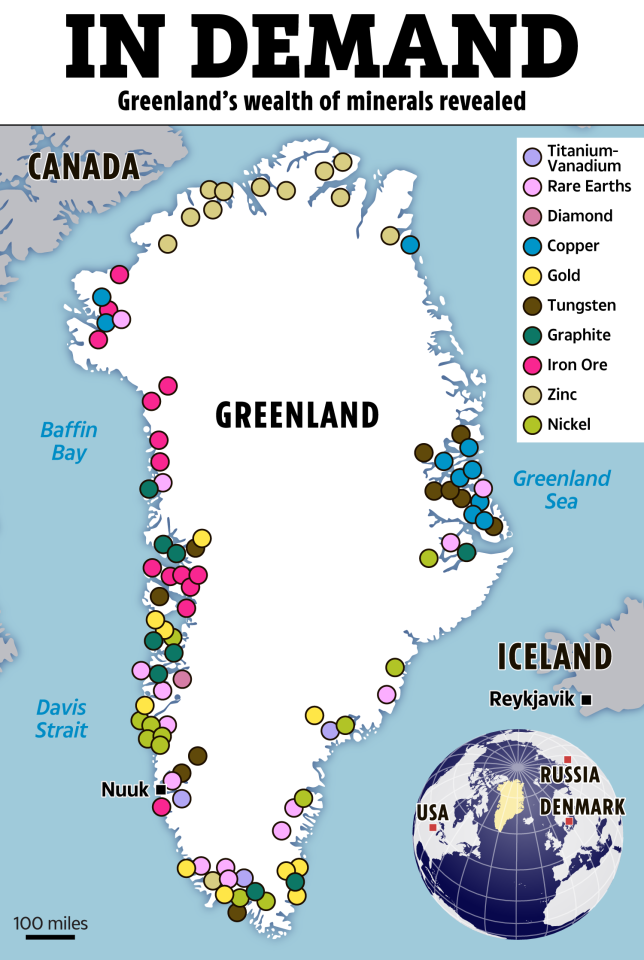
Trump opened his address demanding “immediate negotiations” for Greenland and accused European nations of being “ungrateful” toward the United States. “We want a piece of ice for world protection, and they [Denmark] won’t give it. We’ve never asked for anything else,” he said, reinforcing his decades-long fascination with acquiring the mineral-rich, strategically crucial territory.
The US leader repeatedly insisted that Greenland is vital to global security. “All the United States is asking for is a place called Greenland,” he stated. He went further, asserting that no other nation is capable of defending the island: “No group of nations is in the position to secure Greenland other than the United States.”
Despite his warnings, Trump sought to calm fears of a military takeover. “I don’t have to use force, I don’t want to use force, I won’t use force,” he said. But he added a chilling caveat: should he choose military action, the US military would be “unstoppable.”
The president’s language shifted seamlessly between diplomacy, threats, and bizarre declarations. He described Greenland as “a piece of ice,” urged European nations to accept his acquisition plans, and hinted at consequences if they did not. “You can say yes, and we will be very appreciative, or you can say no, and we will remember,” he said.
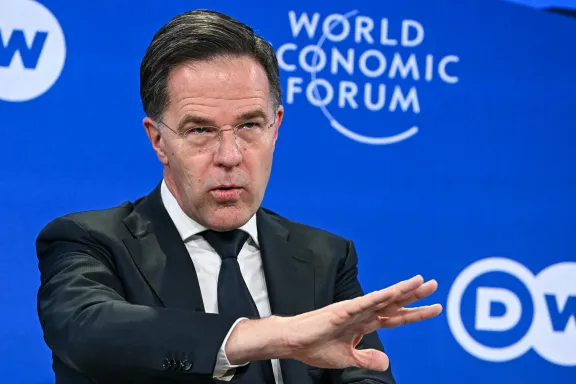
Trump’s Davos address also included commentary on broader geopolitics. He praised the US economy, claimed Europe owes America for its defense in World War II, and criticized Nato as a “one-way street.” He stated, “We pay for everything and get nothing in return,” while pledging he would still be “100 per cent with Nato” despite uncertainties over the alliance’s future.
In a remarkable twist, Trump revealed his plan to build a vast missile defense project he calls the “Golden Dome” on Greenland. “All we want from Denmark… is this land on which we’re going to build the greatest golden dome ever built. It’s going to, by its very nature, be defending Canada,” he said.
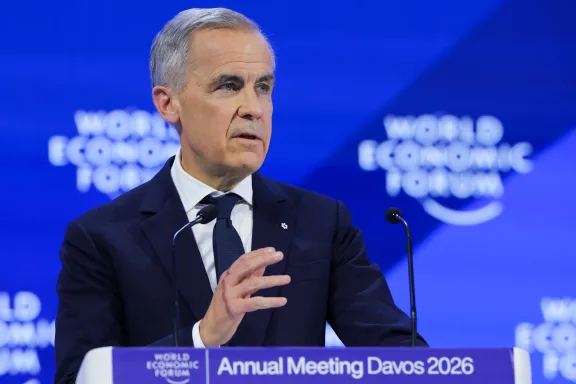
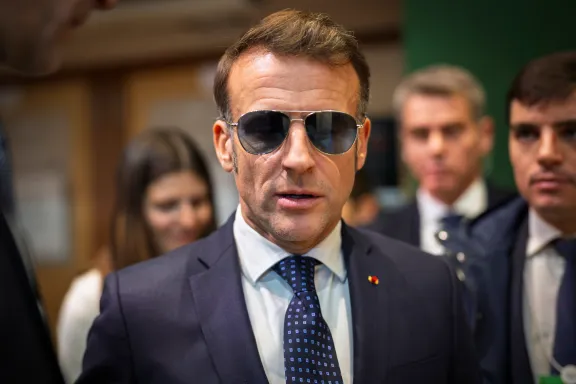
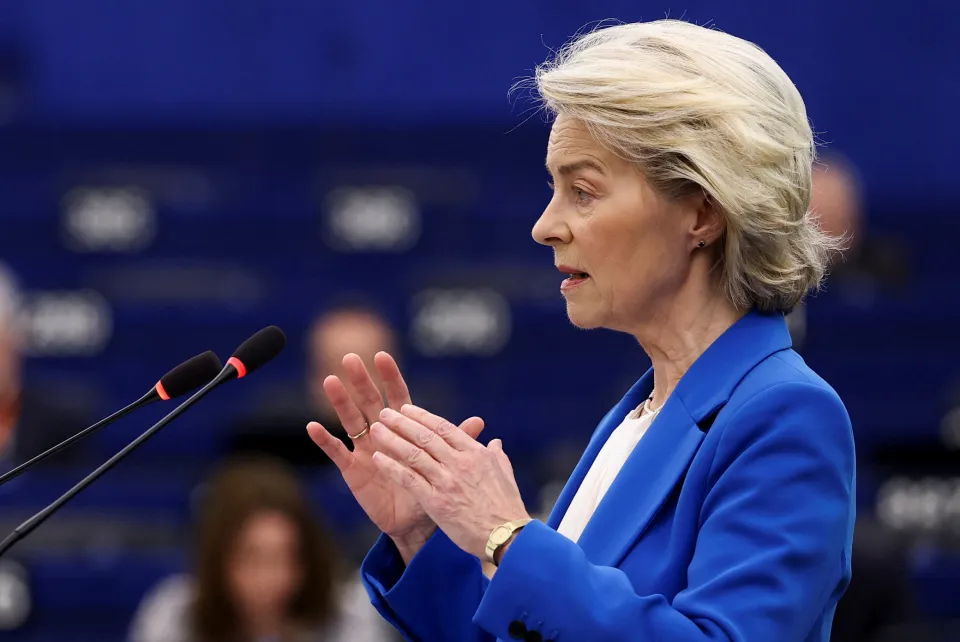
Europeans responded swiftly to Trump’s statements. French President Emmanuel Macron warned that the world risks entering a “place without rules,” while European Commission President Ursula von der Leyen called for a “new independent Europe” fully prepared to act if necessary. Canada’s Prime Minister Mark Carney said the country “strongly opposes tariffs over Greenland” and called for cooperative dialogue on Arctic security.
Belgian Prime Minister Bart De Wever added humor and criticism, branding Trump as “The Very Hungry Caterpillar,” likening his relentless pursuit of Greenland to the insatiable appetite of the children’s book character.
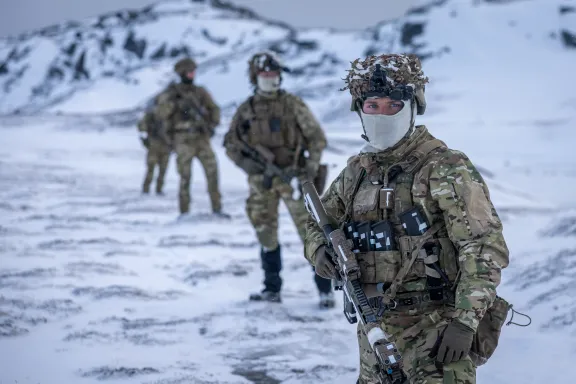
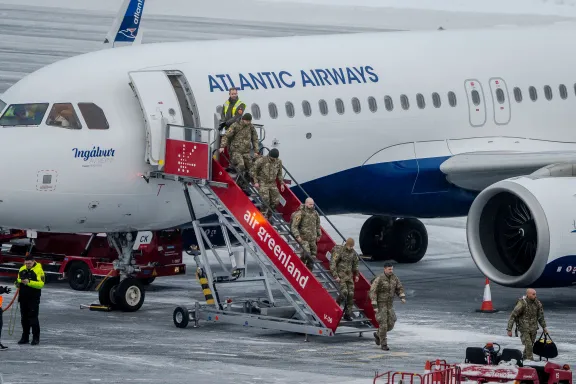
The potential US acquisition of Greenland has already triggered emergency defense measures. NATO troops, including Danish and British units, are stationed on the island. Greenland’s Prime Minister Jens-Frederik Nielsen told citizens to brace for the unexpected: “It is not likely there will be a military conflict, but it can’t be ruled out.”
Trump’s Greenland ambitions are also economic. He announced fresh tariffs of 10 percent on eight European countries—including the UK, Denmark, France, Germany, Sweden, Norway, the Netherlands, and Finland—if they oppose his Arctic plans. The tariffs are set to rise to 25 percent if Greenland is not secured by June 1. The US leader claimed the measures were in response to NATO reconnaissance operations on Greenland, which he said left Washington “baffled.”
The threat of tariffs has further inflamed tensions. Macron criticized Trump’s approach, saying the US president prefers “subordinate Europe” over collaboration. France has prepared for another NATO exercise in Greenland and is ready to commit troops. The UK is exploring deploying RAF and naval units to strengthen the Arctic “tripwire.”
Trump’s speech was filled with controversial remarks beyond Greenland. He said, “They loved me, they called me daddy,” referencing European leaders’ admiration before his Greenland push. On world wars, he claimed Europe would have been speaking “German and maybe a little Japanese” without US intervention in WWII.
He criticized Europe’s mass migration, saying parts of the continent have become “unrecognisable,” and claimed Venezuela would thrive only under US guidance: “They’re destroying themselves. We want strong allies… we want Europe to be strong.”
Despite the provocative rhetoric, Trump insisted diplomacy remains an option. “We want to work with the countries, we’re not looking to destroy them,” he said, adding that he intended to meet Ukrainian President Volodymyr Zelensky, whom he described as willing to “make a deal” over Russia’s ongoing war.
The situation has drawn political reactions worldwide. UK Labour leader Sir Keir Starmer vowed not to yield to Trump’s Greenland pressure, stating, “Britain will not yield on our principles and values about the future of Greenland under threats of tariffs.” The Danish Premier, Mette Frederiksen, is scheduled to meet British leaders to coordinate a response.
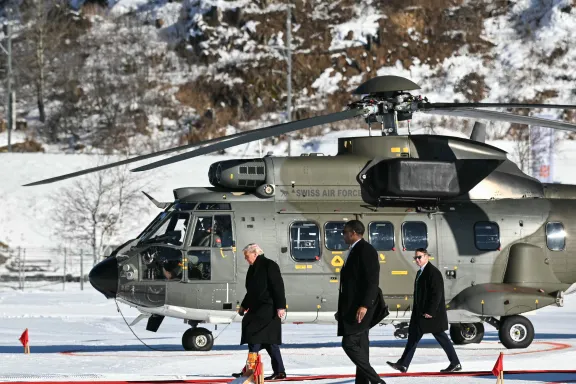
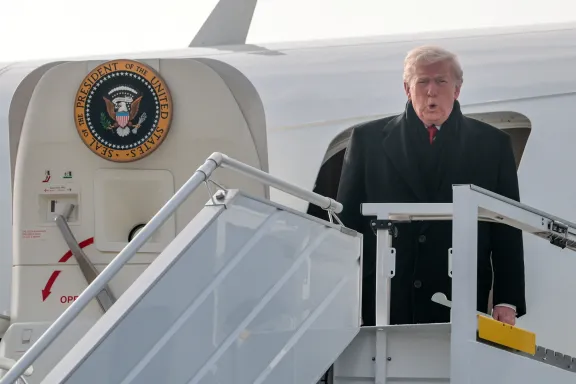
The controversial US president’s visit to Davos was nearly cut short. Air Force One was forced to return to Washington after a “minor electrical issue” shortly after take-off. Yet, Trump’s statements on Greenland and NATO have dominated global headlines, raising serious questions about alliances, Arctic security, and the evolving world order.
Experts warn that Trump’s Greenland fixation could destabilize NATO and trade relations. Analysts note that tariffs could spark an economic conflict, with the potential to impact billions of dollars in transatlantic trade. European leaders are bracing for emergency summits to defend the island and maintain alliance cohesion.
In short, the world watches as Greenland—an island of ice, minerals, and geopolitical significance—becomes the center of a storm unlike any seen in recent decades. From missile defense domes to tariff threats, Trump’s vision for “a piece of ice” may redefine international relations, Arctic security, and US-European dynamics for years to come.
As Trump said in Davos, “These are matters of national security. Nothing makes the situation more clear than what’s going on with Greenland.”
Stay Connected With Volta Fame!
Love keeping up with the latest news, updates, and fan conversations? Don’t miss out — join our growing community and be part of the action!
WhatsApp Channel
X
Facebook Page