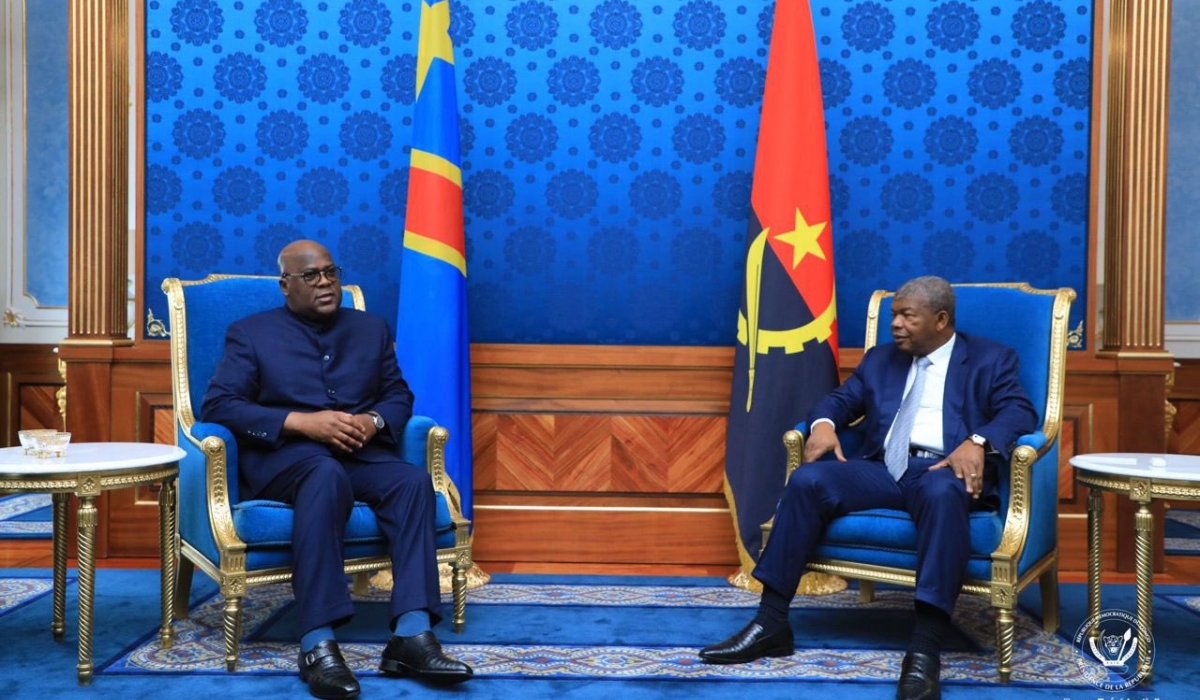
On Sunday, December 14, 2025, President Félix Antoine Tshisekedi Tshilombo of the Democratic Republic of Congo (DRC) made a working visit to Luanda, Angola. While the trip was officially described as a routine diplomatic visit, analysts argue that it carried far deeper significance, given the ongoing security and political pressures in eastern Congo.
Eastern Congo has been plagued by escalating violence, particularly in North and South Kivu. The recent resurgence of clashes between the DRC government forces and the AFC/M23 coalition has worsened the humanitarian crisis and left thousands displaced. In this context, any diplomatic movement takes on added weight.
Tshisekedi’s visit came just days after the peace agreement between the DRC and Rwanda was finalized at a ceremony in Washington, DC, on December 4, 2025. The agreement was widely regarded as a key step toward reducing tensions along the border and addressing the long-standing insecurity in eastern Congo.
Sources close to the DRC government indicate that Tshisekedi traveled to Luanda to revitalize the Luanda talks, a mediation process led by Angolan President João Lourenço under the auspices of the African Union. These talks were designed to foster dialogue among all parties involved in the eastern Congo crisis.
However, the Luanda process had shown signs of losing momentum, especially as fighting intensified. Critics argued that without renewed energy, the talks might fail to achieve meaningful outcomes. Tshisekedi’s visit was therefore a strategic effort to breathe new life into the mediation.
During his discussions with President João Lourenço, Tshisekedi emphasized the importance of regional cooperation and the role of Angola as a neutral mediator. Analysts note that Angola’s influence in Central Africa, particularly its political and security clout, makes it a critical partner in efforts to stabilize eastern Congo.
The visit also served as a platform for Kinshasa to clarify its position on the Washington peace agreement and explore how its implementation could align with ongoing mediation efforts in Luanda. This dual approach aimed to ensure that multiple diplomatic channels complement rather than compete with each other.
Domestically, Tshisekedi faces intense pressure. Politically, he must manage expectations from opposition parties and civil society groups. Security-wise, he confronts a persistent insurgency that threatens both civilians and state authority. The public also watches closely, questioning the government’s capacity to restore lasting peace.
In this light, the Luanda trip was as much about signaling to the international community as it was about concrete negotiations. By engaging directly with Angola, Tshisekedi demonstrated his commitment to diplomatic solutions despite the complex challenges on the ground.
Angola’s role is not purely altruistic. The country has strategic interests in regional stability, including border security and economic connections with the DRC. The talks allowed Angola to reinforce its position as a key mediator while ensuring its own interests are protected.
Beyond security, the discussions touched on economic and strategic partnerships. Kinshasa and Luanda have shared interests in infrastructure, trade, and regional development projects. Strengthening these ties can help stabilize border areas and reduce opportunities for conflict actors to exploit insecurity.
The timing of the visit, following the Washington agreement, was critical. Tshisekedi sought to ensure that the new peace framework could be integrated into broader regional strategies without undermining ongoing mediation efforts in Luanda.
Observers note that the DRC president’s approach reflects a careful balance between diplomacy and domestic politics. He aims to show leadership on the international stage while managing the immediate pressures of a conflict-ridden eastern region.
Tshisekedi’s visit also signaled to other regional leaders that Kinshasa remains committed to multilateral solutions. By working closely with Angola, the DRC hopes to strengthen regional consensus and maintain momentum toward peace.
Despite these efforts, challenges remain. Violence in eastern Congo continues, and the humanitarian situation is deteriorating. The success of diplomatic initiatives will depend on the willingness of armed groups to engage and the capacity of governments to implement agreements effectively.
The Luanda visit highlighted the complexity of diplomacy in conflict zones. While high-level meetings capture headlines, their impact on the ground depends on careful coordination, trust-building, and the alignment of multiple stakeholders.
Many analysts see the trip as part of a broader strategy by Tshisekedi to prevent diplomacy from stalling. By personally engaging with Angola, he sought to reaffirm the importance of dialogue and to reassure partners that Kinshasa remains committed to peace.
The engagement also reinforced Angola’s position as a central actor in Central African security. João Lourenço’s role as a mediator underscores the importance of neutral leadership in ensuring that peace processes are credible and effective.
Some observers question whether the visit will lead to tangible improvements in eastern Congo or remain another diplomatic journey without immediate results. Regardless, it demonstrates that Tshisekedi is actively seeking solutions, rather than relying solely on military measures.
In conclusion, President Tshisekedi’s visit to Luanda was a calculated diplomatic maneuver. It aimed to revive stalled negotiations, align regional and bilateral peace efforts, and signal to both domestic and international audiences that the DRC is committed to achieving lasting peace.
As the implementation of the Washington agreement begins and the Luanda talks attempt a revival, all eyes in Central Africa are on Kinshasa and Luanda. The ultimate question remains: will diplomacy overcome armed conflict, or will eastern Congo continue to face a seemingly endless cycle of violence?